Publikationer
The report examines different methods for monitoring riverine macro litter, using the Warnow River in Germany as a case study.
Its aim is to compare how effective these methods are at detecting and collecting litter, and to evaluate their suitability for long-term monitoring.
The findings show that most litter does not remain floating but accumulates along riverbanks and in vegetation. Therefore, a combination of methods is recommended, with standardized 100 m riverbank surveys forming the backbone of long-term monitoring.
Publikationen analyserer de mekaniske, termiske og kemiske egenskaber af genanvendt polypropylen indsamlet fra Aarhus Å og sammenligner det med jomfrueligt plastmateriale. Formålet er at vurdere, om det genanvendte plast kan bruges i nye produkter. Resultaterne viser, at materialet stadig har anvendelige egenskaber, men med reduceret oxidativ stabilitet og større variation, mens blanding med nyt plast kan forbedre ydeevnen.The publication examines the mechanical, thermal, and chemical properties of recycled polypropylene collected from the Aarhus River and compares it with virgin material. The aim is to evaluate its suitability for reuse in new products. The results show that the recycled material remains usable but has reduced oxidative stability and higher variability, while blending with virgin plastic can improve performance.
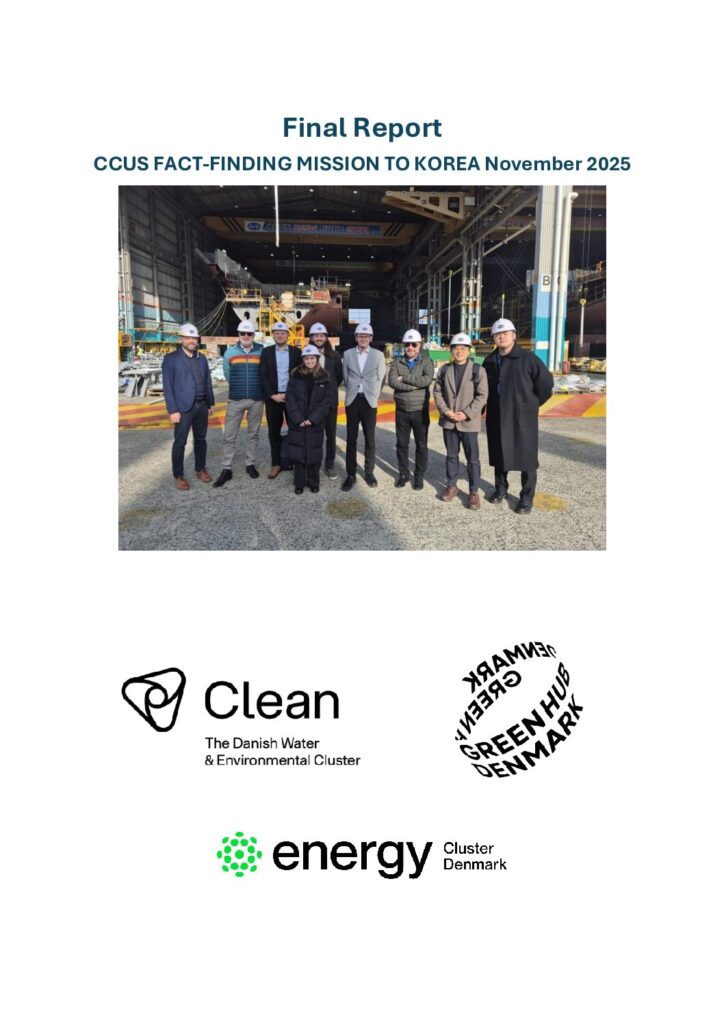
The report provides insights into South Korea’s CCUS ecosystem and highlights new collaboration opportunities between Danish and Korean actors within CO₂ utilisation, maritime carbon capture solutions and green innovation.
More extreme rainfall, increasing overflows, and tighter EU regulation are turning stormwater into a system-level challenge – not just a technical one. In this report, Clean brings together key trends and perspectives from across the water and environmental sector, showing why stormwater and wastewater management now sit high on the agenda for utilities, municipalities and policymakers.
The P.R.E.S.I Industrial Symbiosis Screening Report documents the results and experiences from the second phase of the P.R.E.S.I project and aims to uncover the potential for industrial symbiosis between companies in the AEDIN industrial cluster in Santa Cruz, Brazil.
The report brings together insights from company screenings, workshops, and governance work carried out during an Industrial Symbiosis Week in May 2025, building on the experiences of P.R.E.S.I 1 (2024).
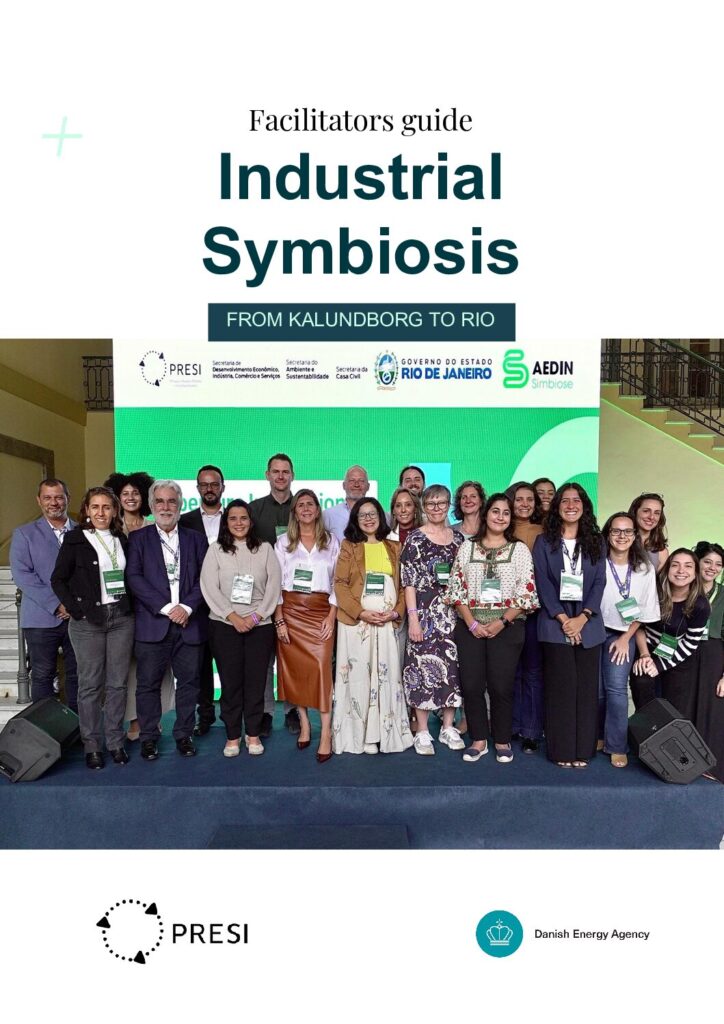
Industrial Symbiosis is a concept that promotes companies' cooperation to optimize the use of resources — reducing waste, emissions, and costs while generating environmental, social, and economic benefits.
This concept is inspired by nature, where the output of one organism becomes a resource for another. In an industrial ecosystem, residual streams such as heat, wastewater, sludge, biomass, gases, or by-products become inputs for neighboring companies, replacing virgin raw materials.
An overview of shared water-related challenges across seven European regions and proposals to solutions regarding water quality, pollution, climate adaptation, and the water–food nexus.
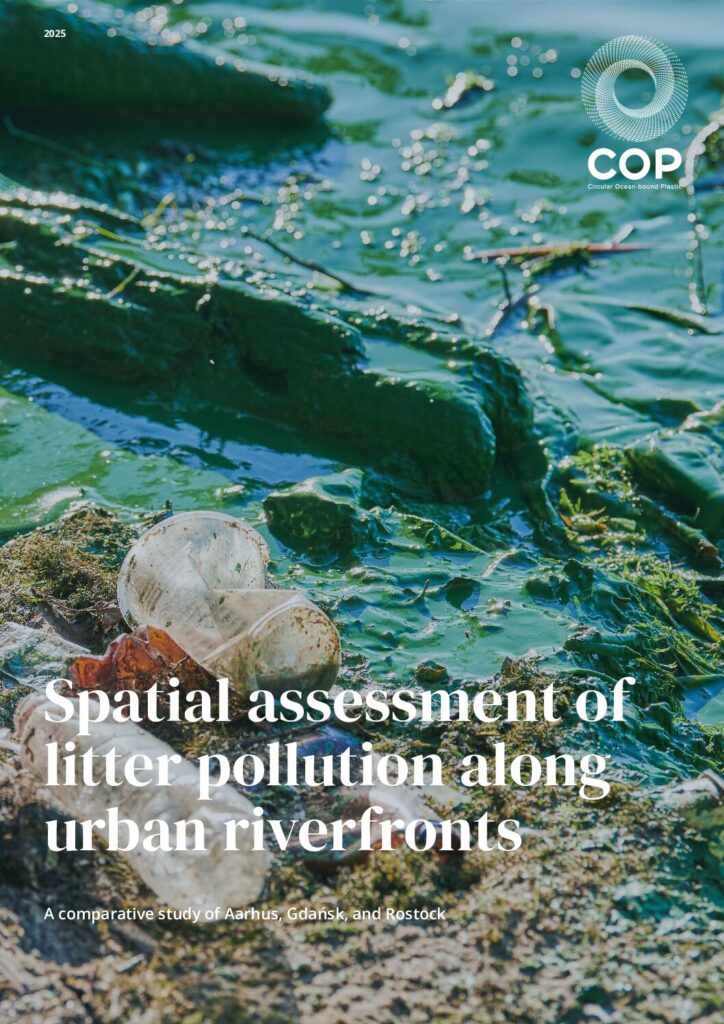
The COP project assesses litter pollution along the riverfronts of Aarhus, Gdańsk, and Rostock. Using GIS analysis, stakeholder input, and field data, it identifies urban hotspots where human activity and limited natural buffers increase the risk of litter entering rivers and the Baltic Sea. The findings guide targeted clean-up efforts and preventive measures to reduce ocean-bound plastic.
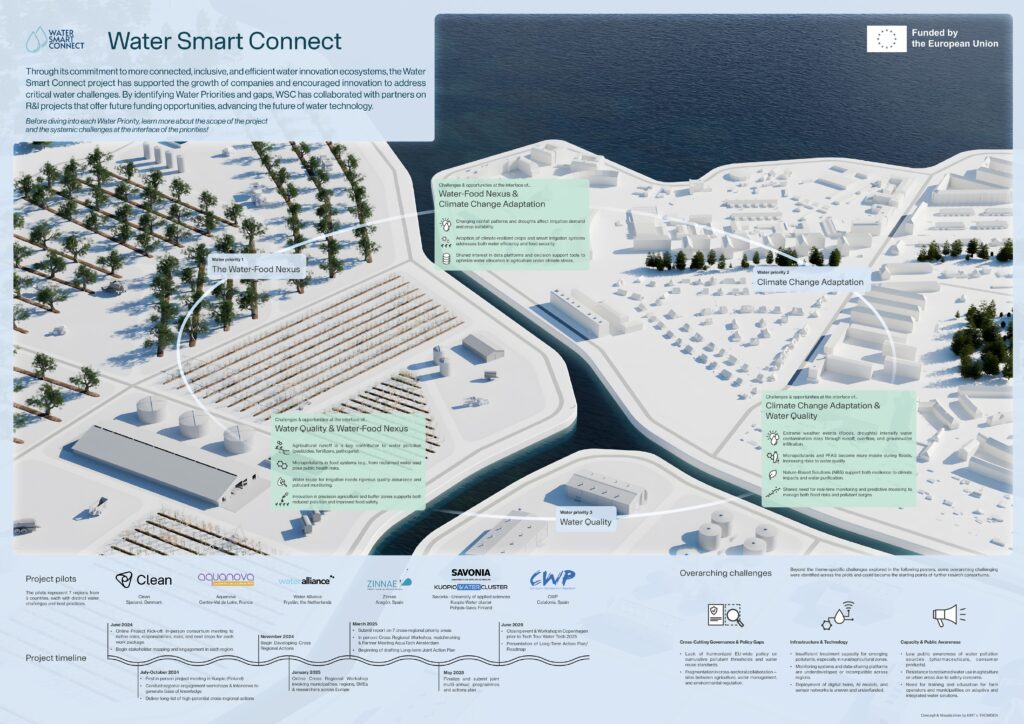
The Water Smart Connect project highlights key insights and actionable recommendations across four focus areas: water and food, climate adaptation, pollution and prevention, and cross-regional collaboration. Explore the infographics for a clear overview of innovative technologies, critical challenges, and emerging opportunities shaping a more resilient water future.
Since 2021, Danish water and environmental technology companies have had the opportunity to obtain funding to enter into collaborations with a number of knowledge institutions through our knowledge bridge projects with funding from the Danish Agency for Higher Education and Science. This has resulted in 42 projects – here are 25 of them.