16. Dec 2025
How can the environmental health of the Baltic Sea be improved?
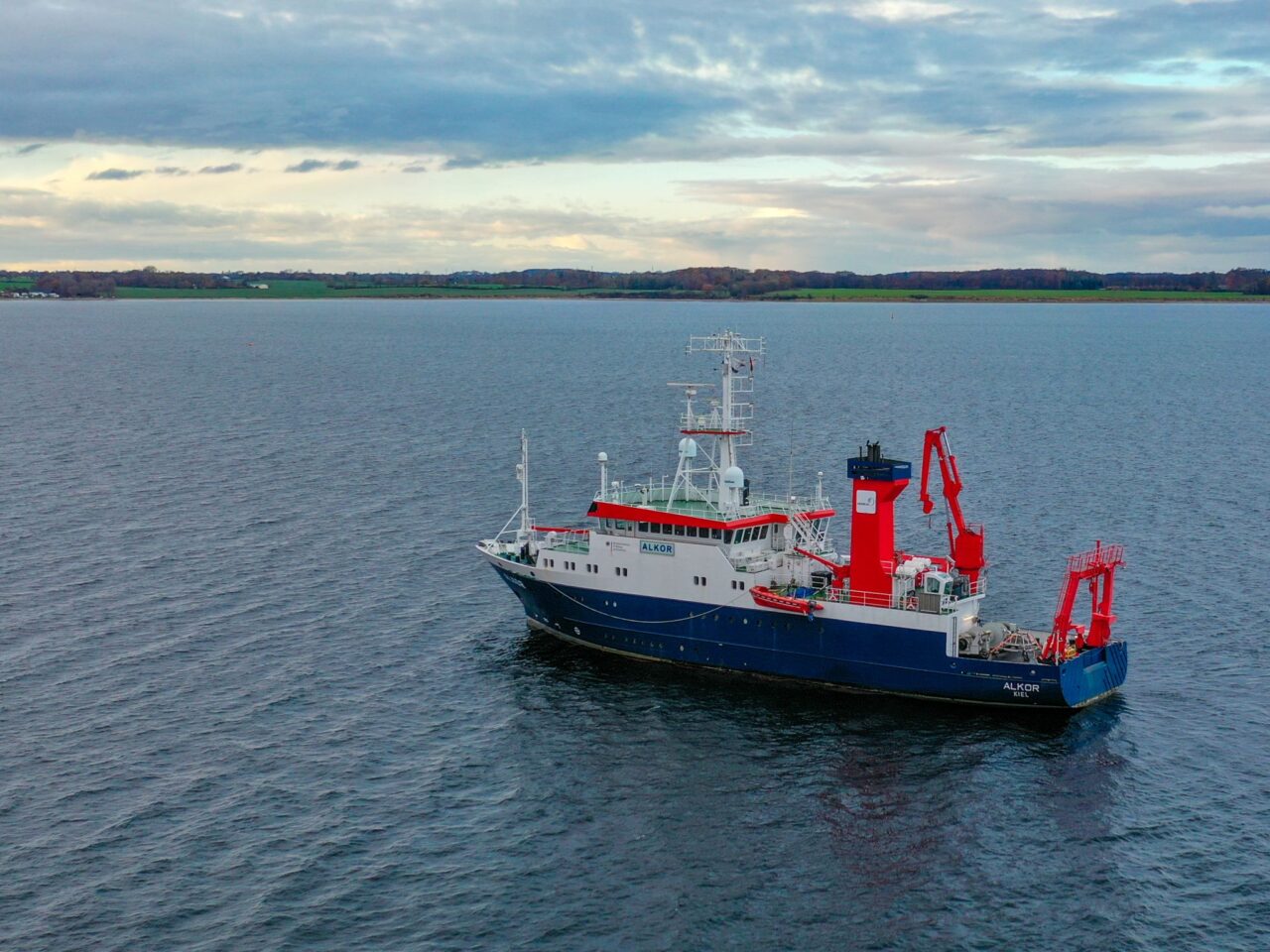
How can we protect the Baltic Sea and improve its ecological status? The new German-Danish Interreg project RECOVER is developing a digital model of the south-western Baltic Sea to address this question. Using microalgae as sensitive biological indicators, the system aims to make visible the environmental condition of the sea, where pressures occur, and which protective measures are actually effective.
The project is funded by the German-Danish Interreg programme with support from the European Regional Development Fund (ERDF) and runs until autumn 2028. Scientists, policymakers, agriculture, fisheries, municipalities and the general public will all be actively involved in the project.
Like all marine ecosystems, the Baltic Sea plays a central role in both the climate system and life along the coasts. It absorbs carbon dioxide from the atmosphere, provides food and oxygen, and contributes to the quality of life for people in the region. At the same time, the Baltic Sea is under pressure. Nutrient inputs, warming, algal blooms and large areas with low or no oxygen threaten this sensitive marine area, which has only limited water exchange with surrounding seas.
The EU Nature Restoration Law obliges member states to initiate restoration measures for at least 20 per cent of degraded marine areas by 2030. In the border region between Denmark and Germany, this is a particularly challenging task, as ocean currents do not stop at national borders – discharges in Germany can shortly afterwards affect Danish waters, and vice versa.
The new Interreg project RECOVER therefore examines how Denmark and Germany can improve the management of the western Baltic Sea, including Kiel Bay as well as the Great and Little Belt.
“Microalgae are at the heart of the project because they are highly sensitive indicators of ecosystem health,” explains Prof. Dr Anja Engel, Head of the Marine Biogeochemistry Research Division at GEOMAR Helmholtz Centre for Ocean Research Kiel. “Each species reacts differently to nutrients, light, salinity and warming. If we understand how the biodiversity of microalgae develops under complex environmental pressures, we can also assess whether restoration measures in the Baltic Sea will be successful.”
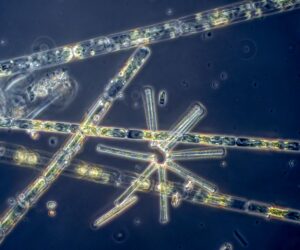
Monitoring microalgae
Over the next three years, RECOVER will lay the foundation for a digital model of the western Baltic Sea – a virtual representation of the marine area that makes environmental developments visible and can identify critical pressures at an early stage. Researchers will record the occurrence of microalgae using high-resolution camera systems that are capable of identifying and counting algal cells in real-time. In addition, analyses of genetic traces in the environment, known as environmental DNA (eDNA), will be used to detect the presence of organisms through genetic material in seawater.
Microalgae form the basis of the food web and play a key role in the carbon cycle. At the same time, toxic species or large-scale blooms can pose health risks, cause oxygen depletion and, in the worst cases, lead to fish mortality. A well-known example is cyanobacteria, often referred to as “blue-green algae”, which frequently occur during summer. Until now, monitoring in the region has been fragmented, and time-consuming laboratory analyses can delay essential decisions – this is where RECOVER aims to contribute new solutions.
Real-time data for a healthier sea
To ensure reliable measurements of water quality in the German-Danish border region, RECOVER is developing robust and affordable sensors that interested citizens can also use. The sensors measure, among other things, nutrients, temperature, oxygen levels and chlorophyll-a.
At the same time, the University of Southern Denmark (SDU) is developing AI-supported data processing that translates biological measurements from microalgae into usable information for the digital model. All measurements are integrated into a simulation platform that reflects environmental conditions and algal dynamics in the border region.
“We combine advanced sensor technology with artificial intelligence to create a system that can monitor the ocean far more comprehensively than traditional methods,” says Associate Professor Jacek Fiutowski from the Mads Clausen Institute at SDU. “Instead of expensive and time-consuming analyses, we obtain real-time data that can be integrated directly into the model.”
From data to action and public engagement
The digital model is not intended solely for research. RECOVER aims to make the warning signals from algae understandable for policymakers, municipalities, fisheries, agriculture and the general public. The project establishes a platform where knowledge, experience and tested methods can be shared across sectors. Actors from business, authorities and civil society are actively involved in assessing the effectiveness and applicability of different protection measures.
“RECOVER cannot save the Baltic Sea on its own, but the project can provide the knowledge and tools that policymakers urgently need today,” says Anja Engel. “By bringing together scientific expertise and technical solutions across borders, we create a foundation for more effective management of the Baltic Sea.”
Towards the end of the project in 2028, RECOVER will deliver concrete results in the form of affordable sensors, AI models for forecasting algal blooms and an interactive platform that allows all interested parties to explore possible futures for the Baltic Sea.
Facts: Interreg project RECOVER
Title: REsilience of COastal Vital Ecosystems through innovative management solutions in the Danish-German border Region (RECOVER)
Project period: October 2025 – September 2028
Budget: EUR 2.3 million
Project lead: GEOMAR Helmholtz Centre for Ocean Research Kiel
Danish project partners: University of Southern Denmark (SDU)
German project partners: Kiel University (CAU)
Network partners: 21 actors from industry, authorities and civil society, including Clean – The Danish Water & Environmental Cluster
Study area: South-western Baltic Sea, including Kiel Bay as well as the Great and Little Belt
Funding: Interreg Deutschland-Danmark with support from the European Regional Development Fund (ERDF)
This news item is based on a press release from the Interreg project RECOVER. Clean – The Danish Water & Environmental Cluster participates in the project as a network partner.
Latest news
All news
26. Feb 2026
Clean Insights report : When rain becomes a system challenge
25. Feb 2026
New Interreg project to pioneer stormwater solutions across borders
19. Feb 2026
Danish experience on a Korean scale
3. Feb 2026
New recruitment methods strengthen Danish companies’ access to international specialists
16. Jan 2026
5 key EU funding programmes: Has your project found the right fit?
2. Jan 2026
From idea to testing: Vibration sensor helps RUNI predict wear on expensive machine parts

18. Dec 2025
A new grant strengthens Danish water solutions and helps companies move from idea to market.
26. Nov 2025
Network on Carbon Removal and CCUS Strengthens Ties Through Delegation Trip in Denmark
25. Nov 2025
From methane to microplastics: 14 SMEs receive support to tackle concrete environmental challenges
20. Nov 2025
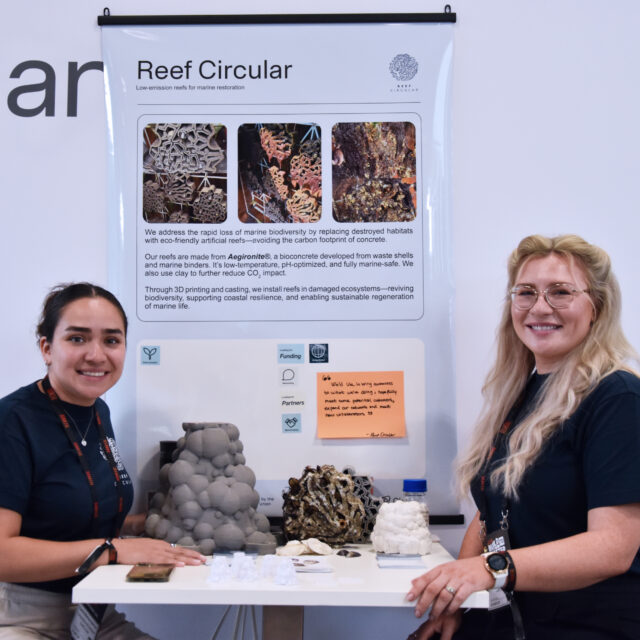
ReefCircular gains international dream partner: New collaboration with WSP is a direct result of Clean-funded pilot project

19. Nov 2025
No company can become circular on its own: more SMEs will develop solutions together through new value chain collaborations
17. Nov 2025
Clean at COP30: From Kalundborg to Belém
31. Oct 2025
Seaweed, Science and Solutions
29. Oct 2025
Shallow groundwater: From challenge to business opportunity for SMEs and startups
27. Oct 2025
British Water and Clean join forces to strengthen water sector collaboration
22. Oct 2025
Danish companies open doors in China
17. Oct 2025
Common challenges, common solutions – knowledge sharing between Denmark and Brazil
16. Oct 2025
Two years of collaborative work ending
10. Oct 2025
Climate adaptation in the border region with POSEIDON
7. Oct 2025
Rock Flour Company receives €6.1 million
29. Sep 2025
10 SMEs in new cross-border pilot projects
24. Sep 2025
PlastTrack at the 100% Climate Neutrality Conference – Making the invisible visible
15. Sep 2025