25. Nov 2025
From methane to microplastics: 14 SMEs receive support to tackle concrete environmental challenges
How do we reduce CO₂ in construction, utilise valuable materials better, protect the marine environment, handle microplastics, or develop new sustainable products?
14 Danish SMEs have now received support through new Knowledge Bridge Express projects to test early prototypes, clarify technical assumptions and document whether their solutions can create real environmental impact.
“A Knowledge Bridge Express project allows companies to test their ideas in practice. When development takes place together with a knowledge partner, the results become far more useful,” says Michael Johansen, Head of Development at Clean.
Here are the questions the companies will now investigate
WOHN — Circular and fire-safe construction in 3D-printed PA6/fibreglass
WOHN is developing passive fire protection for 3D-printed building modules made from upcycled PA6/fibreglass. The project examines how coatings, material combinations and geometry can meet SBI and K1 10 classification requirements. DBI provides fire-technical expertise and testing facilities. The solution has the potential to reduce CO₂ emissions by more than 90% compared to traditional construction.
Nordic Urban Mining — Recovery of precious metals from incinerator bottom ash (IBA)
Nordic Urban Mining is testing a new process that combines mechanical treatment with a specially developed chemical agent to extract precious metals early in the recycling process. FORCE Technology analyses the fractions and validates the efficiency. The aim is to reduce chemical and water use and ensure that critical raw materials are not lost.
Sensemakers — AI tool for visual seabed analysis
Sensemakers is developing an AI-based analysis tool that classifies seabed types using underwater photos captured by their SenseBoat USV. DHI develops data processing and segmentation models. The project investigates whether automated filtration can make marine monitoring more scalable and less resource-intensive.
PEATZ — Digital ecological prioritisation of wetland restoration
PEATZ is testing a new digital method that combines ecological data layers and AI to identify the areas where restoration would produce the greatest climate and nature gains. The Danish Technological Institute develops the analytical logic and tests the method. The project will document whether digital decision support can accelerate restoration and reduce uncertainty for landowners.
NXPAS — Online monitoring of amines in CO₂ capture
NXPAS is developing a laser spectroscopic sensor for real-time measurement of amine residues in CO₂ capture facilities. The Danish Technological Institute performs validation in laboratory and process environments. The project examines whether online monitoring can reduce emissions, increase safety and strengthen operational efficiency in future CCUS solutions.
SmartBrønd — Optimised stormwater management via digital twins
SmartBrønd tests integration between their controllable water brake and digital twin platforms. DHI provides Future City Flow and supports model integration. The project investigates whether automatic control based on real-time data can reduce overflows, optimise capacity use and minimise damage during extreme rainfall.
ASPRAY — Rapid visual screening for asbestos
ASPRAY is conducting a laboratory proof of concept to assess whether aptamers can bind selectively to asbestos fibres and produce a clear visual signal. The Danish Technological Institute designs and carries out the tests. The project is a crucial first step towards a rapid screening tool that can reduce waiting times and risks during demolition.
CARA Cooling — Technical testing of water-based cooling prototype
CARA Cooling is testing a laboratory prototype of its water-based cooling technology, which uses surplus heat as an energy source. In collaboration with DTU PowerLab, the company carries out measurement series to map the turbo compressor’s operating range, temperatures and energy performance. The project aims to establish a technical foundation for optimising components and clarifying the technology’s application potential before further development towards demonstration and full-scale operation.
Stonereefs — 3D-printed concrete reefs with biofilm
Stonereefs is developing 3D-printed reef modules in low-CO₂ concrete combined with biofilm to accelerate biological colonisation. The Danish Technological Institute develops the concrete mix, while the University of Copenhagen develops the biofilm. The reefs are tested in Aarhus Harbour to assess biodiversity effects and scalability.
BAIONYX — Microplastic filtration in urban drainage
BAIONYX is investigating new filter mesh types and sequential filtration principles to capture microplastics directly in drainage systems. The Danish Technological Institute advises on test design. Frederiksberg Municipality acts as a test site. The aim is to document performance under different hydraulic conditions.
Scan-Plast — BioCharCov: reduction of greenhouse gases from cattle barns
Scan-Plast, in collaboration with Danish Waste Solutions, Ny Vraa Bioenergy and the Danish Technological Institute, is testing a new filter technology that concentrates and breaks down methane and other greenhouse gases from cattle barns. The project examines adsorption in biochar/zeolite and subsequent microbial reduction.
Ove Kock — Air purification system for waste collection trucks
Ove Kock is developing and testing a combined cyclone and filter system designed to reduce particles, microorganisms and odours around waste collection trucks. Zoeller Group provides technical components, and Odense Renovation serves as the pilot municipality. The Danish Technological Institute performs real-time measurements and validation.
CYCLEUP — Regeneration of used casting boards
CYCLEUP is developing a regeneration method for used casting boards using microwave technology, thermosetting adhesive and a new surface film. FORCE Technology performs strength and durability tests. The project will document the potential for circular recirculation in construction.
Femi.Eko — Plant-based absorbent layers in period underwear
Femi.Eko is developing polyester-free period underwear based on hemp and organic cotton. The Danish Technological Institute tests durability, comfort and leak resistance. The project examines whether plant-based materials can provide the same functionality, reduce microplastics and improve hygiene without PFAS or biocides.
What is a Knowledge Bridge Express project?
Knowledge Bridge Express is a short, focused development track that helps SMEs clarify technical or scientific questions at an early stage of technology or product development. The purpose is to provide rapid access to specialised knowledge from research institutions, enabling companies to test assumptions, collect data or carry out proof-of-concept before investing further.
A Knowledge Bridge Express project is always carried out in collaboration between at least one SME and one knowledge partner. Clean collaborates with 21 Danish knowledge institutions that contribute analyses, laboratory testing, technical sparring and validation. Projects typically run for 3–8 months and can receive up to DKK 200,000 in support shared between the company and the knowledge partner.
👉 Want to stay updated on upcoming opportunities? Sign up for Funding Insider.
Funding
Knowledge Bridge Express is co-funded by the Danish Board of Business Development and the European Union.
Under the national initiative Virksomhedsudvikling Danmark, the business-oriented programmes funded by the Danish Board of Business Development are gathered in a single entry point. The aim is to make it easier for Danish SMEs and entrepreneurs to find the right support and development opportunities.
Follow along at virksomhedsguiden.dk.
Latest news
All news
26. Feb 2026
Clean Insights report : When rain becomes a system challenge

25. Feb 2026
New Interreg project to pioneer stormwater solutions across borders
19. Feb 2026
Danish experience on a Korean scale

3. Feb 2026
New recruitment methods strengthen Danish companies’ access to international specialists

16. Jan 2026
5 key EU funding programmes: Has your project found the right fit?
2. Jan 2026
From idea to testing: Vibration sensor helps RUNI predict wear on expensive machine parts

18. Dec 2025
A new grant strengthens Danish water solutions and helps companies move from idea to market.
16. Dec 2025
How can the environmental health of the Baltic Sea be improved?
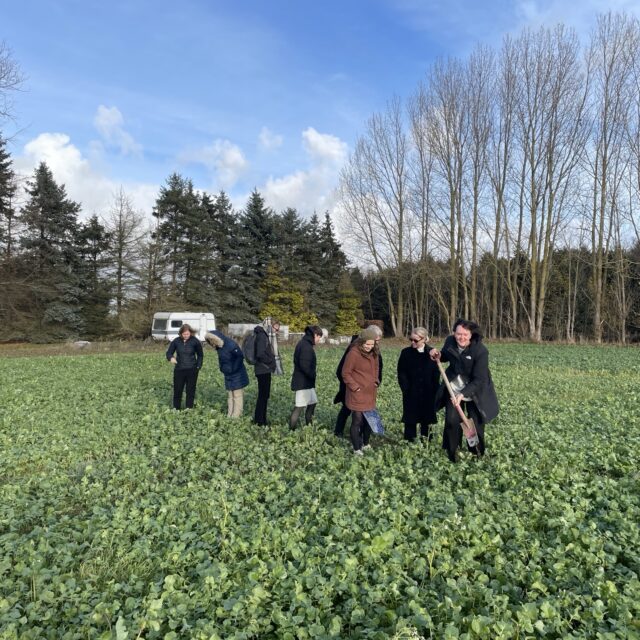
26. Nov 2025
Network on Carbon Removal and CCUS Strengthens Ties Through Delegation Trip in Denmark
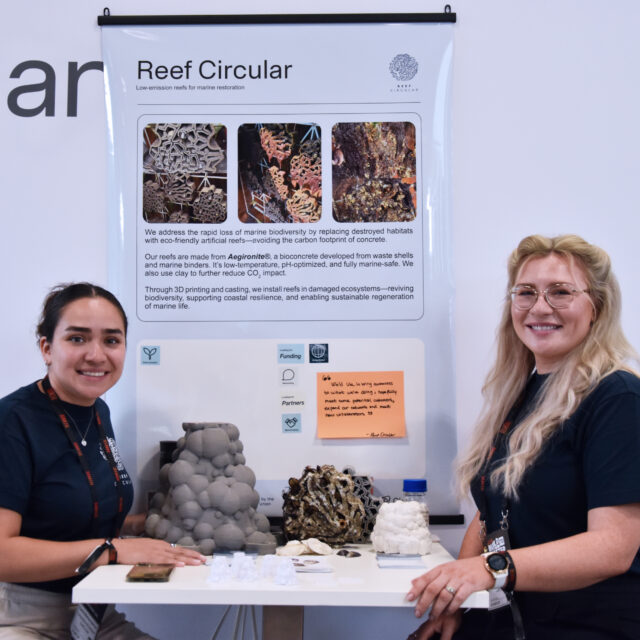
20. Nov 2025
ReefCircular gains international dream partner: New collaboration with WSP is a direct result of Clean-funded pilot project

19. Nov 2025
No company can become circular on its own: more SMEs will develop solutions together through new value chain collaborations

17. Nov 2025
Clean at COP30: From Kalundborg to Belém
31. Oct 2025
Seaweed, Science and Solutions
29. Oct 2025
Shallow groundwater: From challenge to business opportunity for SMEs and startups
27. Oct 2025
British Water and Clean join forces to strengthen water sector collaboration
22. Oct 2025
Danish companies open doors in China
17. Oct 2025
Common challenges, common solutions – knowledge sharing between Denmark and Brazil
16. Oct 2025
Two years of collaborative work ending
10. Oct 2025
Climate adaptation in the border region with POSEIDON
7. Oct 2025
Rock Flour Company receives €6.1 million
29. Sep 2025
10 SMEs in new cross-border pilot projects
24. Sep 2025
PlastTrack at the 100% Climate Neutrality Conference – Making the invisible visible
15. Sep 2025