16. Jan 2026
5 key EU funding programmes: Has your project found the right fit?
Get an overview and tips on what to look out for when you apply.
The European Union offers some of the world’s largest public funding programmes for research, innovation and the green transition. For cleantech companies and organisations, these programmes can be critical to development, scale-up and internationalisation.
At the same time, competition is intense – and a strong application can fail simply because it targets the wrong instrument.
Based on both Clean’s and ICN’s (International Cleantech Network) experience across European projects, this overview outlines five key EU programmes and the evaluation logic applicants need to understand before applying.
#1. Horizon Europe – mission first
Horizon Europe is the EU’s flagship research and innovation programme, centred on major societal missions such as climate neutrality and industrial competitiveness. While often perceived as a research programme, the strongest proposals clearly articulate how they contribute to system-level change.
Tip: Evaluators look for credible pathways to impact and for consortia that reflect real-world value chains – not just technical excellence in isolation.
Read more about Horizon Europe’s application process here.
#2. Interreg – practical cooperation
Interreg focuses on cross-border cooperation and practical implementation. Here, success is less about novelty and more about whether a project can credibly address shared regional challenges.
Clean currently leads the South Baltic-funded SMEBeyond project, which helps small and medium-sized enterprises in the South Baltic region overcome barriers to internationalisation.
Tip: Clear governance structures, defined roles and long-term cooperation are often decisive factors in evaluation.
Read more about Interreg’s application process here.
#3. Innowwide – beyond Europe
Innowwide supports innovative SMEs exploring markets outside Europe through early-stage feasibility and market activities.
For cleantech SMEs, Innowwide supports activities such as market studies, regulatory analysis, technical adaptation and local partner identification in third countries.
Tip: Experience shows that the programme works best when embedded in a broader project portfolio, strengthening local partnerships and follow-up potential.
Read more about Innowwide’s application process here.
#4. Eureka Eurostars – close to market
Eurostars supports SME-led international R&D projects with a strong commercial focus. While attractive due to its bottom-up logic, success depends heavily on having the right partners in place.
Clean has hosted several partner matching seminars and information sessions for Eurostars stakeholders.
Tip: Projects grounded in existing networks and cluster collaboration tend to perform better than ad hoc consortia.
Read more about Eureka Eurostars’ application process here.
#5. Erasmus+ – skills for the green transition
Erasmus+ funds education, training and skills development that underpin innovation and deployment of green technologies.
Funded by Erasmus+, Clean hosts activities and develops learning materials for eco-innovators under the Endurance project. These activities are tailored for SMEs and startups looking to integrate green growth and European Green Deal strategies.
Tip: Proposals perform better when they demonstrate lasting institutional impact and clear links between education, industry and labour market needs.
Read more about the Erasmus+ application process here.
Funding starts with fit
EU funding is about alignment. Organisations that succeed understand the logic of each programme and match ambition, partnerships and impact accordingly – treating EU funding as a strategic portfolio rather than isolated calls.
Interested in taking a deeper dive into which EU funding programme fits your project?
Become a Clean Funding Insider to access a wide range of funding programmes and opportunities.
Cleans’ activities are co-funded by the European Union and the Danish Board of Business Development.
Latest news
All news
26. Feb 2026
Clean Insights report : When rain becomes a system challenge

25. Feb 2026
New Interreg project to pioneer stormwater solutions across borders
19. Feb 2026
Danish experience on a Korean scale

3. Feb 2026
New recruitment methods strengthen Danish companies’ access to international specialists
2. Jan 2026
From idea to testing: Vibration sensor helps RUNI predict wear on expensive machine parts

18. Dec 2025
A new grant strengthens Danish water solutions and helps companies move from idea to market.
16. Dec 2025
How can the environmental health of the Baltic Sea be improved?
26. Nov 2025
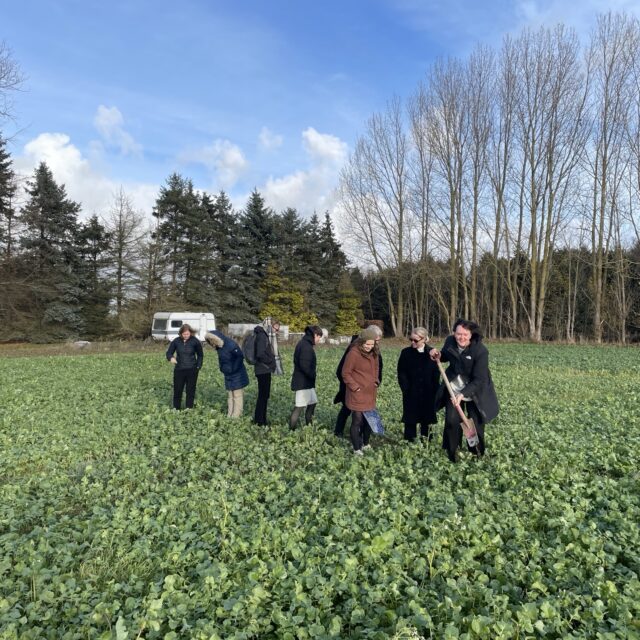
Network on Carbon Removal and CCUS Strengthens Ties Through Delegation Trip in Denmark

25. Nov 2025
From methane to microplastics: 14 SMEs receive support to tackle concrete environmental challenges
20. Nov 2025
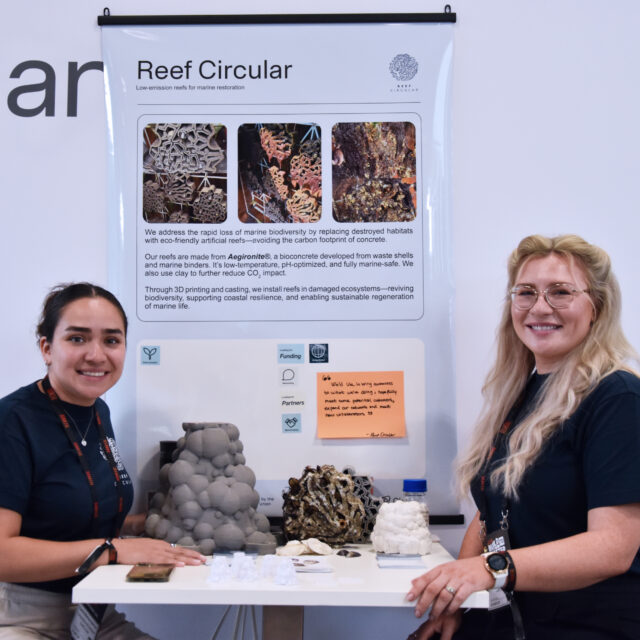
ReefCircular gains international dream partner: New collaboration with WSP is a direct result of Clean-funded pilot project

19. Nov 2025
No company can become circular on its own: more SMEs will develop solutions together through new value chain collaborations

17. Nov 2025
Clean at COP30: From Kalundborg to Belém
31. Oct 2025
Seaweed, Science and Solutions
29. Oct 2025
Shallow groundwater: From challenge to business opportunity for SMEs and startups
27. Oct 2025
British Water and Clean join forces to strengthen water sector collaboration
22. Oct 2025
Danish companies open doors in China
17. Oct 2025
Common challenges, common solutions – knowledge sharing between Denmark and Brazil
16. Oct 2025
Two years of collaborative work ending
10. Oct 2025
Climate adaptation in the border region with POSEIDON
7. Oct 2025
Rock Flour Company receives €6.1 million
29. Sep 2025
10 SMEs in new cross-border pilot projects
24. Sep 2025
PlastTrack at the 100% Climate Neutrality Conference – Making the invisible visible
15. Sep 2025