26. Feb 2026
Clean Insights report : When rain becomes a system challenge
More extreme rainfall, increasing overflows and tighter EU regulation are turning stormwater into a system-level challenge – not just a technical one.
In its new report, Clean Insights: Stormwater Overflow – Managing Urban Water Under Rising Pressure, Clean brings together key trends and perspectives from across the water and environmental sector, showing why stormwater and wastewater management now sit high on the agenda for utilities, municipalities and policymakers.
Read & download the report
More rain, more overflows – and tougher choices
Across Europe, cities are already experiencing the impacts of climate change. Short, intense cloudbursts are becoming more frequent, putting pressure on sewer systems that were never designed for today’s hydraulic loads. The result is a growing gap between system capacity and reality.
In cities with combined sewer systems, this leads to:
- More frequent discharges of untreated wastewater into rivers and coastal waters
- Higher environmental and public health risks, including nutrients, microplastics, PFAS, and other hazardous substances
- Rising operational costs, investment needs, and long-term liability for utilities and municipalities
“We see a clear link between climate trends and the increasing pressure on existing systems. The challenge is no longer only technical – it is also regulatory, economic, and strategic.”
says Scott, Head of Water at Clean.
Regulation is accelerating the shift
The report highlights the revised Urban Wastewater Treatment Directive (UWWTD) as a key driver of change. Together with the Water Framework Directive and the EU Zero Pollution Action Plan, stormwater and combined sewer overflows are now firmly within the regulatory spotlight.
In practice, this means:
- Stronger requirements for monitoring, documentation, and transparency
- A shift from reactive response toward prevention and risk-based prioritisation
- Greater need for coordination between utilities, municipalities, and solution providers
Stormwater management is therefore evolving from a background operational issue into a visible governance and compliance challenge.
Danish solutions already addressing the challenge
The report also shows that Danish companies are already delivering solutions that respond directly to this new reality. Clean’s member base includes companies working with advanced sensing, digital monitoring platforms, and intelligent control solutions embedded directly in sewer infrastructure.
Examples from the Clean ecosystem include Aquasense, Consibio, and SmartBrønd, whose solutions help utilities gain better data, improve documentation, and prioritise investments under increasing hydraulic and regulatory pressure. Together, they illustrate the broader shift toward hybrid stormwater management approaches that combine physical infrastructure with digital intelligence.
From insight to action: projects in practice
Beyond trends and regulation, the report points to concrete action through projects already underway. One example is ReCircWater, a cross-border initiative addressing stormwater overflow as both a pollution risk and a resource opportunity.
Through pilots and practical methods, ReCircWater tests compact and adaptable solutions for stormwater monitoring, treatment and reuse at critical discharge points. The project strengthens analytical and documentation capabilities for utilities and municipalities, while supporting circular water strategies and climate-resilient stormwater management across the Baltic Sea region.
“When we look across data, policy trends, and market developments, it’s clear that pressure on the system also creates opportunity. There is strong demand for solutions that can be implemented quickly, documented clearly, and scaled across cities.”
says Jack, Business Analyst at Clean.
Get involved
If stormwater overflow, monitoring, or regulatory compliance is relevant to your organisation, Clean offers opportunities to engage through projects like ReCircWater, pilot activities, knowledge exchange, and collaboration with Danish solution providers.
The ReCircWater project is co-funded by the European Union – Interreg South Baltic 2021–2027

Latest news
All news
25. Feb 2026
New Interreg project to pioneer stormwater solutions across borders
19. Feb 2026
Danish experience on a Korean scale

3. Feb 2026
New recruitment methods strengthen Danish companies’ access to international specialists
16. Jan 2026
5 key EU funding programmes: Has your project found the right fit?
2. Jan 2026
From idea to testing: Vibration sensor helps RUNI predict wear on expensive machine parts

18. Dec 2025
A new grant strengthens Danish water solutions and helps companies move from idea to market.
16. Dec 2025
How can the environmental health of the Baltic Sea be improved?
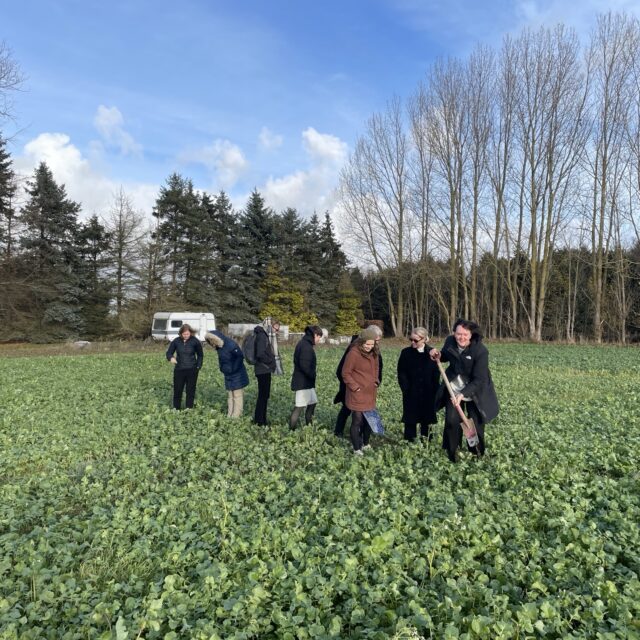
26. Nov 2025
Network on Carbon Removal and CCUS Strengthens Ties Through Delegation Trip in Denmark

25. Nov 2025
From methane to microplastics: 14 SMEs receive support to tackle concrete environmental challenges
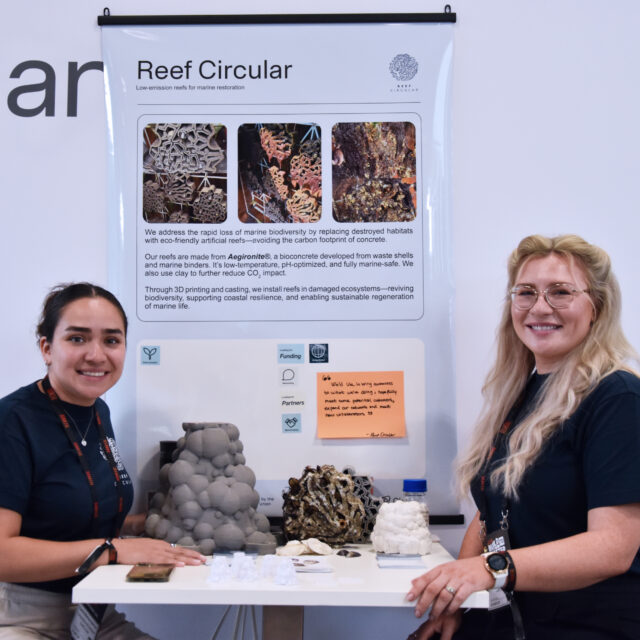
20. Nov 2025
ReefCircular gains international dream partner: New collaboration with WSP is a direct result of Clean-funded pilot project

19. Nov 2025
No company can become circular on its own: more SMEs will develop solutions together through new value chain collaborations

17. Nov 2025
Clean at COP30: From Kalundborg to Belém
31. Oct 2025
Seaweed, Science and Solutions

29. Oct 2025
Shallow groundwater: From challenge to business opportunity for SMEs and startups
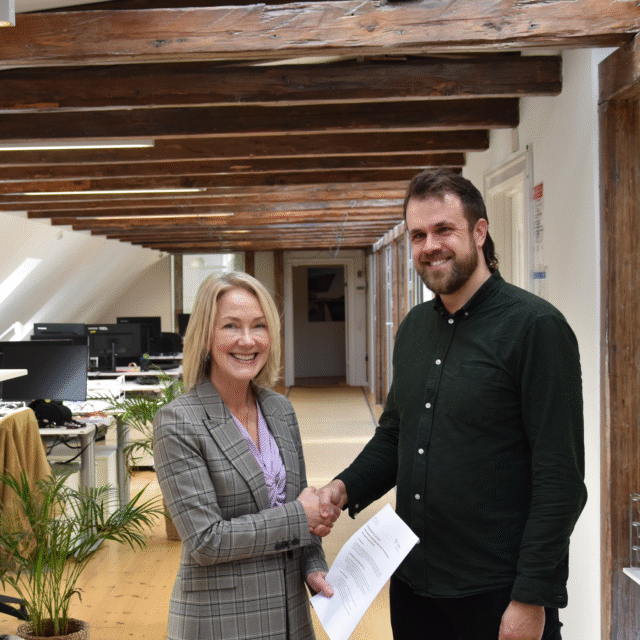
27. Oct 2025
British Water and Clean join forces to strengthen water sector collaboration
22. Oct 2025
Danish companies open doors in China
17. Oct 2025
Common challenges, common solutions – knowledge sharing between Denmark and Brazil
16. Oct 2025
Two years of collaborative work ending
10. Oct 2025
Climate adaptation in the border region with POSEIDON
7. Oct 2025
Rock Flour Company receives €6.1 million
29. Sep 2025
10 SMEs in new cross-border pilot projects
24. Sep 2025
PlastTrack at the 100% Climate Neutrality Conference – Making the invisible visible
15. Sep 2025