29. Sep 2025
10 SMEs in new cross-border pilot projects
From water filters and underwater cameras to textile recycling and new cooling systems – ten Danish small and medium-sized enterprises are now taking their ideas out into the world. The International Innovation Pilot program gives companies the opportunity to test prototypes, methods, and market access in six different countries: China, the Netherlands, Germany, Norway, the United Kingdom, and Sweden.
The fund gives small businesses the opportunity to test technical assumptions in practice. When this is done in collaboration with an international partner, the experience becomes much more valuable.
-says Scott Allison, project manager at Clean.
This is how the ten companies will test their solutions
Drink Lumi — clean drinking water straight from the tap
In many places in Denmark — and in large parts of Europe — drinking water is contaminated with pesticides, PFAS, and heavy metals. With support from International Innovation Pilot, Drink Lumi ApS will further develop its compact filter, which is mounted directly on the tap. The filter works without electricity or batteries and, according to previous tests at the Danish Technological Institute, it can remove a number of unwanted substances with high efficiency. In the project, Drink Lumi is working with Hidly in Shenzhen and DTI to develop a new membrane that is both more effective and can be adapted to water qualities in different countries. The prototypes will be tested in the laboratory, and the results will determine whether the technology can be scaled up to a broader international market.
Anemo Robotics — underwater camera for measuring marine plants
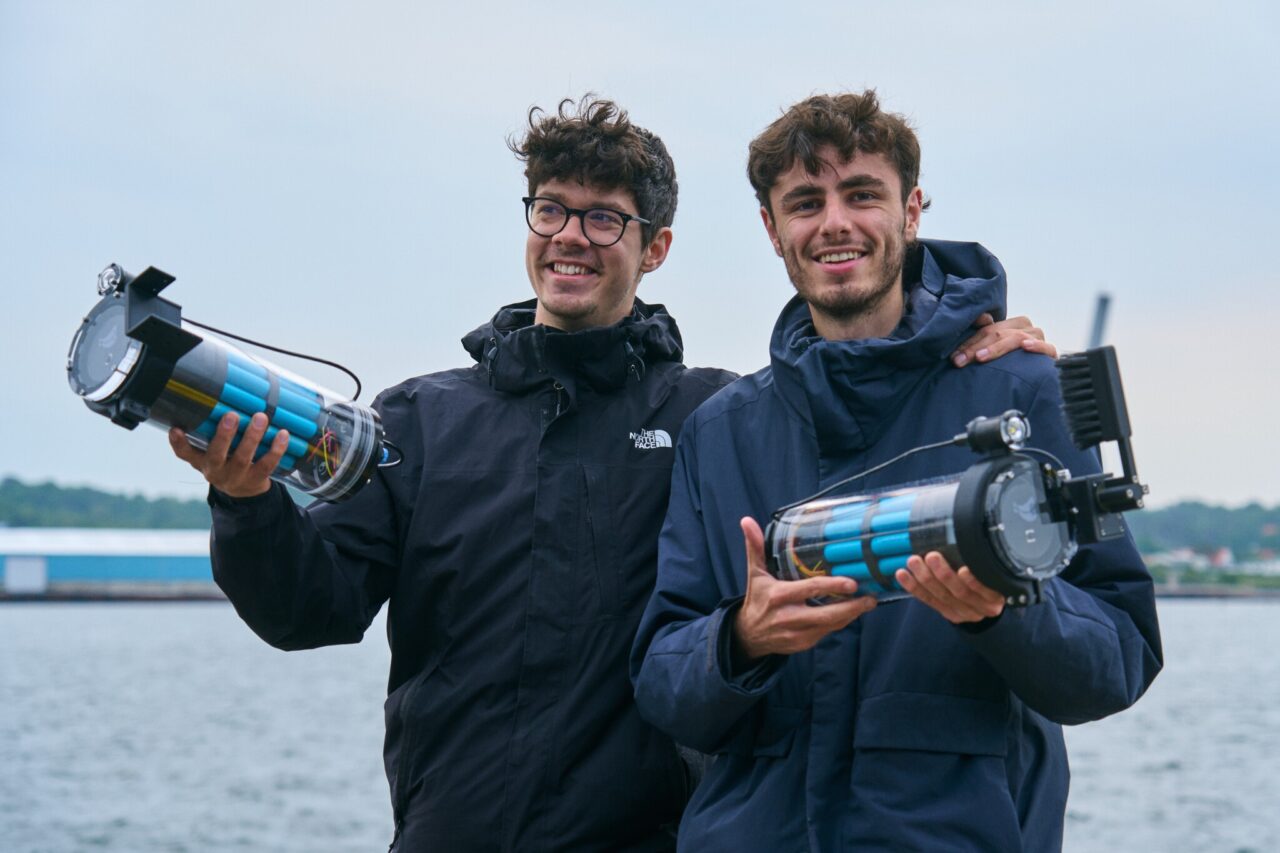
Eelgrass beds and kelp forests are crucial for both coastal protection and biodiversity, but today it is almost impossible to closely monitor their development. Divers can only provide snapshots, and satellites cannot penetrate the water. Anemo Robotics is therefore collaborating with the Dutch research institute NIOZ to develop an underwater camera that uses the NDVI method — known from agriculture — to measure plant health. The camera combines RGB and NIR optics and will be able to remain in the water for long periods of time and send data continuously. The pilot project includes field validation in the Netherlands, where it is being investigated whether the technology can deliver stable time-series of data. If successful, coastal managers and researchers will have a whole new tool for detecting changes in the marine environment in good time.
PEATZ — decision-making tool for wetland restoration
Peat bogs and drained fields contain large amounts of carbon, but many landowners are reluctant to restore wetlands. Uncertainty about finances, subsidies, and long-term consequences makes the decision difficult. The Danish company PEATZ has developed the ImPredictor tool, which combines satellite data, hydrological models, and economic simulations. In just a few minutes, a landowner can get an assessment of both the climate impact and economic consequences of restoring wetlands on their land. The tool is now being adapted to the German market in collaboration with ZukunftMoor and Blue Planet Innovators. The project is testing how the method works in practice in a country with vast areas of drained peat and whether it can support faster decisions and access to support schemes.
FlowMinerals — CO₂ removal from seawater
Industry needs lime as a raw material, while society is looking for new methods to remove CO₂ from circulation. FlowMinerals is developing an electrochemical system that can extract CO₂ from seawater using a pH swing. The process yields two products: gaseous CO₂, which can be stored or used industrially, and solid calcium carbonate (CaCO₃), which can replace lime from mining in, for example, concrete production. The project is investigating the possibilities of establishing a pilot plant in Norway, and the company is working to build local partnerships that can pave the way for an initial demonstration. The goal is to test whether the technology can deliver stable results in practice while creating a by-product that is in demand by industry.
ReefCircular — artificial reefs at offshore facilities
The construction of offshore wind turbines and other offshore infrastructure can alter the marine environment and remove natural habitats for fish and small animals. ReefCircular is collaborating with WSP UK to develop reef modules made of clay and bioconcretions that can act as scour protection while also revitalizing the seabed. The materials are produced at low temperatures and combine fishing industry waste products with natural binders. The pilot project includes design development and testing of monitoring techniques such as underwater robots and AI-based species recognition. The results will show whether the structures can both protect infrastructure and support a more diverse marine environment.
E-CIP Concept — exporting cleaning methods to Sweden
Process industries such as dairies and breweries use large amounts of water and energy for CIP (Cleaning-In-Place). E-CIP Concept has developed a solution that reuses rinse water in cleaning cycles, significantly reducing resource consumption. The technology has already been tested on a full scale in Denmark, and now the project will explore opportunities for export to Sweden. This will be done through a targeted export process in collaboration with the Danish Embassy in Stockholm and the SBM+ program. The funds will be used to prepare market access, establish relationships with new partners, and test how the documentation from the Danish cases can be used in dialogues with Swedish customers.
BAIONYX — filtering microplastics in rainwater
Microplastics from car tires, among other things, often end up in sewer systems and are washed into lakes, streams, and coasts when the rainwater becomes too heavy for basins and overflows to hold back. BAIONYX has developed a modular filter that can be installed in rainwater and overflow systems and, according to previous tests in Denmark, captures a large proportion of the small particles. The company is now expanding with pilot projects in Norway and Sweden, where, in collaboration with municipalities and research environments, it will investigate how the system works under different hydraulic conditions. The aim is to gather experience that can show whether the technology can be a practical solution to a growing problem in urban environments.
INTEL Engineering — laser cleaning for industry
Industrial cleaning and surface treatment often require large amounts of chemicals or grinding, which is both time-consuming and can create waste. INTEL Engineering is collaborating with HAITCH in China to develop a battery-powered robot that uses laser light for cleaning. The robot will be tested in various industries where the requirements for precise surface treatment are high, such as the automotive and wind energy sectors. The project is investigating whether the robot can deliver consistent quality, reduce downtime, and at the same time make cleaning less stressful for employees and the environment.
GLYON — recycling textile waste
Large quantities of textiles end up as waste, especially mixed materials such as polycotton, which are difficult to separate. GLYON has developed a process in which CO₂ is used in a catalytic reaction to separate the fibers so that they can be recycled. At Brightlands Chemelot Campus in the Netherlands, the company is now working to scale up and validate the technology on an industrial scale. The project is investigating whether the process can deliver fibers of a quality that the industry can reuse, thus creating a new path for textile waste that would otherwise be lost.
CARA Cooling — cooling powered by surplus heat
The demand for cooling is growing, while large amounts of heat energy are wasted. CARA Cooling, in collaboration with Alfa Laval in Sweden and DTU Sustain, will test a cooling system in which surplus heat drives the process. The system is based on steam under vacuum and a turbo compressor, which makes it possible to cool without an electric motor. The project is preparing to establish a pilot plant at a customer’s site so that the technology can be tested in full operation. The goal is to find out whether the solution can utilize existing resources more efficiently and reduce the need for electricity for cooling.
What is International Innovation Pilot?
With support from International Innovation Pilot, companies are given the opportunity to test their ideas in practice together with an international partner. The results will provide new knowledge and experience that can determine whether the technologies are ready for the next step in an international market.
The scheme gives Danish SMEs the opportunity to test and mature new technologies or methods in collaboration with a foreign partner. Each project receives DKK 75,000 in support (co-financing makes it possible to allocate up to DKK 100,000), typically runs for 2–12 months, and focuses on testing, prototypes, and preparation for export.
👉 Want to know more? Sign up for Funding Insider and get notified about upcoming funding opportunities.
About the funding
International Innovation Pilot is part of Clean’s cluster grant, funded by the Danish Board of Business Development and the Danish Business Authority with co-financing from the European Union.
Cluster organizations such as Clean are set up to bring together companies, knowledge institutions, and other players to strengthen collaboration and innovation. The aim is to help SMEs in particular to develop new solutions, gain access to markets, and create growth through strong networks.
Want to know more?
-
Scott Grønnegaard Allison
Chief Project Manager
Tel +45 50 29 67 71
sca@cleancluster.dk
Linkedin
Latest news
All news
26. Feb 2026
Clean Insights report : When rain becomes a system challenge

25. Feb 2026
New Interreg project to pioneer stormwater solutions across borders
19. Feb 2026
Danish experience on a Korean scale
3. Feb 2026
New recruitment methods strengthen Danish companies’ access to international specialists

16. Jan 2026
5 key EU funding programmes: Has your project found the right fit?
2. Jan 2026
From idea to testing: Vibration sensor helps RUNI predict wear on expensive machine parts

18. Dec 2025
A new grant strengthens Danish water solutions and helps companies move from idea to market.
16. Dec 2025
How can the environmental health of the Baltic Sea be improved?
26. Nov 2025
Network on Carbon Removal and CCUS Strengthens Ties Through Delegation Trip in Denmark
25. Nov 2025
From methane to microplastics: 14 SMEs receive support to tackle concrete environmental challenges
20. Nov 2025
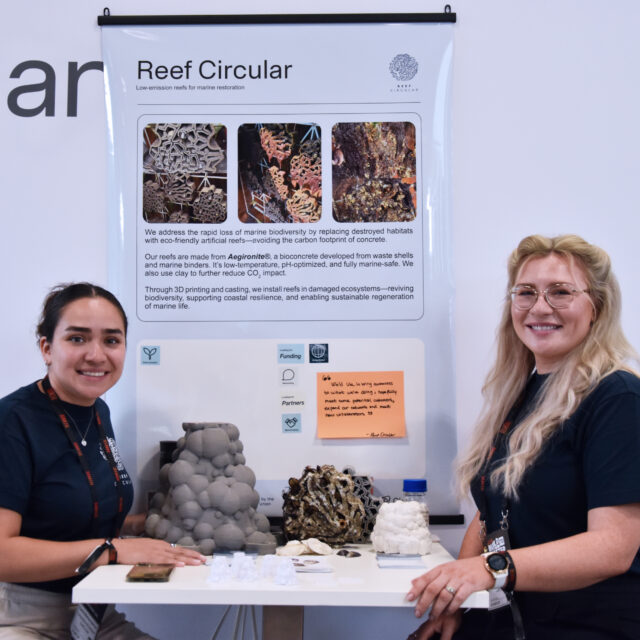
ReefCircular gains international dream partner: New collaboration with WSP is a direct result of Clean-funded pilot project

19. Nov 2025
No company can become circular on its own: more SMEs will develop solutions together through new value chain collaborations
17. Nov 2025
Clean at COP30: From Kalundborg to Belém
31. Oct 2025
Seaweed, Science and Solutions
29. Oct 2025
Shallow groundwater: From challenge to business opportunity for SMEs and startups
27. Oct 2025
British Water and Clean join forces to strengthen water sector collaboration
22. Oct 2025
Danish companies open doors in China
17. Oct 2025
Common challenges, common solutions – knowledge sharing between Denmark and Brazil
16. Oct 2025
Two years of collaborative work ending
10. Oct 2025
Climate adaptation in the border region with POSEIDON
7. Oct 2025
Rock Flour Company receives €6.1 million
24. Sep 2025
PlastTrack at the 100% Climate Neutrality Conference – Making the invisible visible
15. Sep 2025