19. Feb 2026
Danish experience on a Korean scale
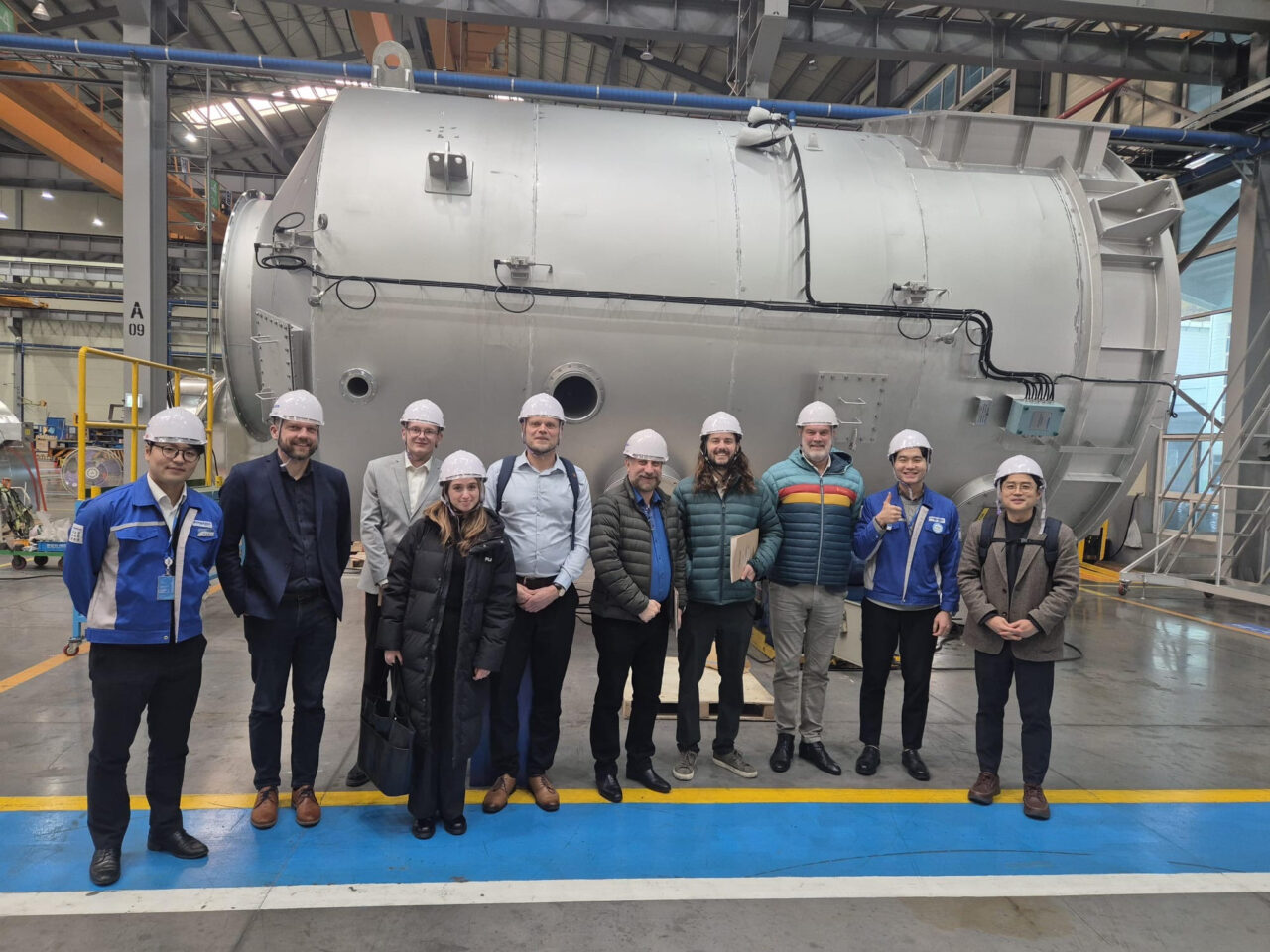
How can Danish knowledge about CO₂ capture find its way to one of Asia’s most ambitious industrial nations? That question was the focus when a Danish CCUS delegation recently returned home from an intensive innovation mission to South Korea.
The mission brought together companies, universities, clusters and knowledge institutions with a common goal: to identify new partners and translate technological knowledge into concrete innovation projects that can contribute to the green transition – both in Denmark and South Korea.
The delegation trip took place from 24 to 28 November 2025 and included visits to Seoul, Daejeon, Pohang, Ulsan and Busan, among other places.
Project focus: Carbon Capture to Korea (C2K)
The innovation mission was carried out as part of Carbon Capture to Korea (C2K) – a project that aims to bring Danish CCUS expertise closer to the South Korean market.
The project is led by Energy Cluster Denmark and builds on Denmark’s CO₂Vision project. Clean, Green Hub Denmark and Innovation Centre Denmark (Seoul) are participating as partners. Together, they are working to strengthen cooperation between Danish and South Korean players in the field of Carbon Capture, Utilisation and Storage (CCUS).
Specifically, C2K is about making cooperation possible in practice. Through market analyses, mapping of key players, feasibility studies and a targeted fact-finding mission, the project is investigating where there are real opportunities for joint development and demonstration projects.
At the same time, the project takes a sober look at the barriers that may stand in the way – from regulation and technical requirements to business models – so that Danish CCUS solutions can be brought into play on a solid and realistic basis in South Korea.
The project was supported by the Danish Energy Agency.
From strategy to concrete dialogues
During the week, the delegation, consisting of Clean, CORC, Aarhus University, and DTI, met with a wide range of Korean research environments, industrial players, and innovation actors.
The programme provided insight into national strategies, laboratories, and pilot plants, and created dialogue on how Danish CCUS competencies can interact with Korean industrial capacity and scale.
The focus was on, among other things:
- CCUS research and application-oriented development
- Maritime solutions and onboard carbon capture (OCC)
- Test and demonstration environments
- Regional and national approaches to CO₂ reduction
The mission has resulted in a number of concrete dialogues on future collaborations and project opportunities, which are now being further developed.
A strong starting point for joint CCUS projects
South Korea has ambitious climate goals and significant industrial scale. Denmark contributes strong research environments, technological know-how and practical experience with CCUS. Together, this creates a solid foundation for long-term cooperation.
Particular potential was identified in the field of maritime CCUS solutions. In Busan, the delegation participated in technical discussions on onboard carbon capture (OCC), where technical solutions, pilot concepts and future implementation were on the agenda.
Next step: From potential to practice
With new contacts and clear guidelines, work is now continuing to develop the ideas into actual innovation and demonstration projects. The focus is on long-term partnerships and linking the collaboration to international and European funding opportunities.
Organisations with an interest in CCUS collaborations between Denmark and South Korea are welcome to get in touch.
Want to know more?
-
Martina Cristino Hayez
Project Manager
Tel +45 53 33 40 54
mch@cleancluster.dk
Linkedin
Latest news
All news
26. Feb 2026
Clean Insights report : When rain becomes a system challenge

25. Feb 2026
New Interreg project to pioneer stormwater solutions across borders
3. Feb 2026
New recruitment methods strengthen Danish companies’ access to international specialists
16. Jan 2026
5 key EU funding programmes: Has your project found the right fit?
2. Jan 2026
From idea to testing: Vibration sensor helps RUNI predict wear on expensive machine parts

18. Dec 2025
A new grant strengthens Danish water solutions and helps companies move from idea to market.
16. Dec 2025
How can the environmental health of the Baltic Sea be improved?
26. Nov 2025
Network on Carbon Removal and CCUS Strengthens Ties Through Delegation Trip in Denmark
25. Nov 2025
From methane to microplastics: 14 SMEs receive support to tackle concrete environmental challenges
20. Nov 2025
ReefCircular gains international dream partner: New collaboration with WSP is a direct result of Clean-funded pilot project

19. Nov 2025
No company can become circular on its own: more SMEs will develop solutions together through new value chain collaborations
17. Nov 2025
Clean at COP30: From Kalundborg to Belém
31. Oct 2025
Seaweed, Science and Solutions
29. Oct 2025
Shallow groundwater: From challenge to business opportunity for SMEs and startups
27. Oct 2025
British Water and Clean join forces to strengthen water sector collaboration
22. Oct 2025
Danish companies open doors in China
17. Oct 2025
Common challenges, common solutions – knowledge sharing between Denmark and Brazil
16. Oct 2025
Two years of collaborative work ending
10. Oct 2025
Climate adaptation in the border region with POSEIDON
7. Oct 2025
Rock Flour Company receives €6.1 million
29. Sep 2025
10 SMEs in new cross-border pilot projects
24. Sep 2025
PlastTrack at the 100% Climate Neutrality Conference – Making the invisible visible
15. Sep 2025