24. Apr 2023
Canada will inspire CO2 capture in Denmark
The press release is written byt ATV. Read it here.
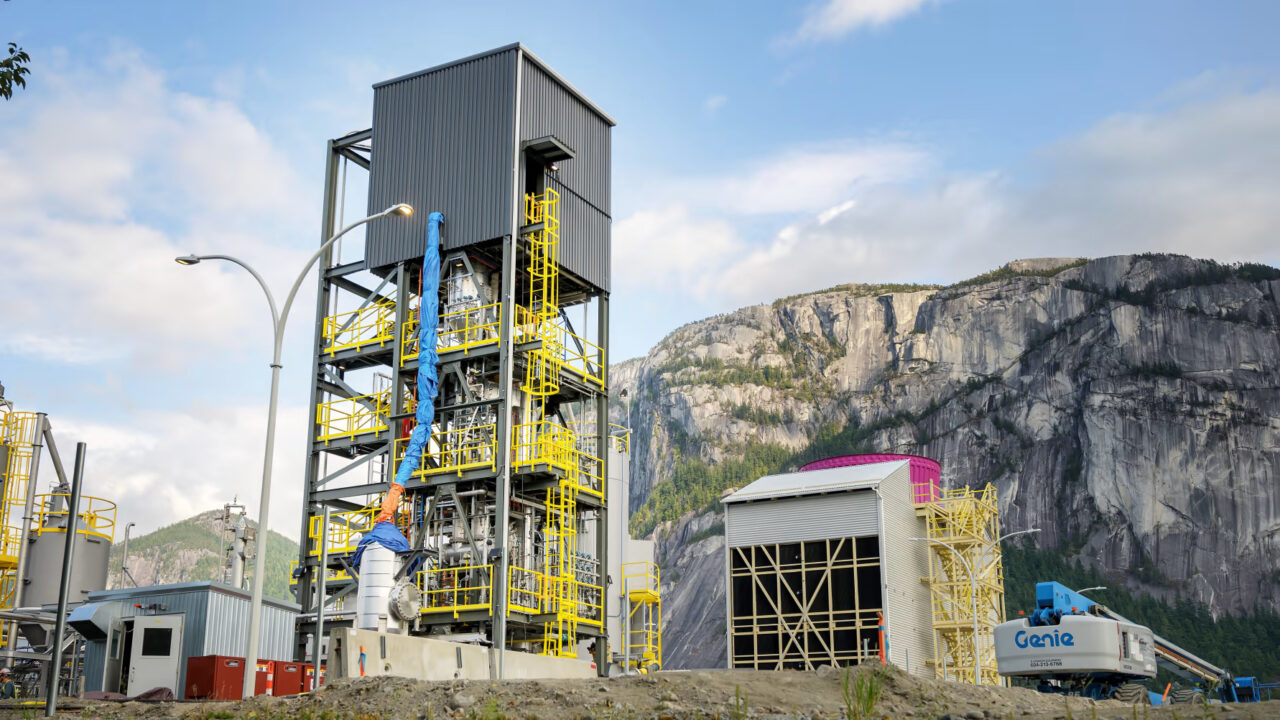
We need to move fast if we are to implement the first CCS plants by 2025, as the political agreement states. That’s why a Danish delegation of experts in CO2 capture, utilization and storage is traveling to Canada to get inspiration on how CCUS can contribute to meeting Denmark’s climate goals.
Denmark must continue to develop at a high pace in order for CO2 technologies to contribute to the Danish reduction targets.
Therefore, the Danish Academy of Technical Sciences (ATV) together with CLEAN has gathered a Danish delegation of 24 experts in CCUS (Carbon Capture, Utilization & Storage), who will travel to Canada in week 17 to learn more about the specific challenges in Danish development of CCUS solutions and the potentials and barriers associated with these climate technologies. Canada is a world leader in CCUS and already has commercial installations in CO2 capture.
Katrine Thomsen from the Ministry of Climate, Energy and Utilities is particularly interested in seeking inspiration on how political and regulatory authorities can continue to support the establishment of a Danish value chain for the deployment of CCS:
I look forward to learning more about how Canada has solved regulatory barriers, created the necessary framework and ensured the rapid establishment of the necessary value chain.
The delegation includes representatives from the Ministry of Foreign Affairs, the Ministry of Climate, Energy and Utilities, the Danish Council on Climate Change, the Novo Nordisk Foundation, the research community and a number of both small and large companies, including Maersk and Ørsted.
“The broadly composed delegation is a point in itself, as the entire ecosystem must be reflected and new value chains built if Denmark is to succeed in developing CCUS technologies and the associated infrastructure and public framework legislation,” says Lia Leffland, Academy Director at the Danish Academy of Technical Sciences.
The delegation visit also aims to bring core players from the Danish ecosystem together with leading Canadian players across research, business and the public sector.The delegation will therefore strengthen the relationship both internally and externally and thus create fertile ground for collaboration between Canada and Denmark. The visit is organized in collaboration with Green Hub Denmark and the Government of Canada Trade Commissioner Service.
Need to identify potentials and risks
Denmark has an obvious opportunity to make CCUS part of the solution to the Danish CO2 reduction targets as well as a green business area. Denmark’s former oil and gas fields are well suited for CO2 storage, and with Denmark’s large share of renewable energy, it is obvious that Denmark should take the lead in the development of CO2 utilization for e.g. green fuels.
How we move forward with concrete development and implementation as well as coordination of, for example, the infrastructure around CCUS initiatives, the Danish delegation must find inspiration in the large North American country.
If the potential is to be realized, it is important that the government plays an active role in creating the right framework conditions for development, infrastructure, cross-sectoral cooperation, etc. just as it is crucial to identify potential risks associated with the roll-out of CCUS before making it an important part of Danish climate policy.
“Denmark needs an insight into the status of the technologies. How far along are they in Canada and what challenges have they faced. CCUS has been identified as a cornerstone of Danish climate policy, and it is therefore important to uncover the risks and potentials associated with the development of these technologies and the framework around them,” says analyst at the Danish Council on Climate Change’s secretariat Nis Bertelsen, who is also participating in the trip.
ATV will compile the experiences from the trip in a report that will be widely used in the public debate on a Danish CCUS strategy. The delegation’s input will also be included at ATV’s Annual Meeting on May 11, where Minister for Climate, Energy and Utilities Lars Aagaard will present the government’s thoughts on – and plans for – technological transition.
QUOTES FROM THE DELEGATION
“The key task with the development of CCS in Denmark is to create the full value chain in time and create the framework for financing. To ensure this, it is, among other things, crucial that we ensure the regulatory framework for CCS to be developed in a Danish and European context. I look forward to learning more about how Canada has solved regulatory barriers, created the necessary framework and ensured the rapid establishment of the necessary value chain.” – Katrine Thomsen, Deputy Head, Ministry of Climate, Energy and Utilities
“I am interested in experiences that Maersk can use to understand how to build an efficient infrastructure for CCUS. We are focused on the development of green fuels so that Maersk can become carbon neutral by 2040 and the transportation sector can become fossil-free as soon as possible. Hydrogen and CO2 infrastructure is an important part of this development.” – Jacob Hjerrild Zeuthen, Senior Future Fuels Manager, Maersk Energy Transition
“In addition to the obvious challenges of implementing and scaling plants and infrastructure, we need to ensure a balanced focus on CCS so that we don’t focus on short-term solutions. I am particularly concerned with the potential of DAC technology to contribute to negative emissions, which otherwise can only be delivered through biological uptake, and we do not have sufficient land area to realize this. And at the same time, we need broad public acceptance and support.” – Claus Beier, Professor of Ecosystems and Sustainability, Head of Department, Department of Geosciences and Natural Resource Management, University of Copenhagen
“Denmark needs an insight into the status of the technologies. What is the status in Canada and what challenges have been encountered? CCUS has been identified as a cornerstone of Danish climate policy, and it is therefore important to uncover the risks and potentials associated with the development of these technologies and the framework around them.” – Nis Bertelsen, PhD, Analyst, The Danish Council on Climate Change Secretariat
“The broadly composed delegation is a point in itself, as the entire ecosystem must be reflected and new value chains built if Denmark is to succeed in developing CCUS technologies and the associated infrastructure and public framework legislation.” – Lia Leffland, Director of the Academy of Technical Sciences
Want to know more?
-
Kasper Havemann
Senior Project Manager (Parental leave)
Tel +45 26 81 91 92
kah@cleancluster.dk
Linkedin
Latest news
All news
2. Mar 2026