Nature-Based Solutions for Freshwater Management
How can nature-based solutions in lakes, rivers, wetlands, and reservoirs strengthen biodiversity, improve water quality, and deliver more ecosystem services?
With a new Danish–Chinese network, Clean and strong research and technology partners are bringing together knowledge and cases to develop concrete action plans for implementing nature-based solutions in China.
Purpose and focus
The project establishes a new collaboration between Danish and Chinese actors focused on implementing nature-based solutions in freshwater systems in China in order to:
- Improve biodiversity
- Increase the delivery of ecosystem services (e.g., water purification, climate adaptation, and recreational value)
- Create a foundation for future joint demonstration and innovation projects
The project period is planned from January 2026 to December 2026.
Two concrete cases in China
The project is anchored in two specific freshwater cases, which serve as shared “testbeds” for learning, prioritisation, and planning.
Case 1 – Miyun Reservoir (Beijing) and the Yanqing area
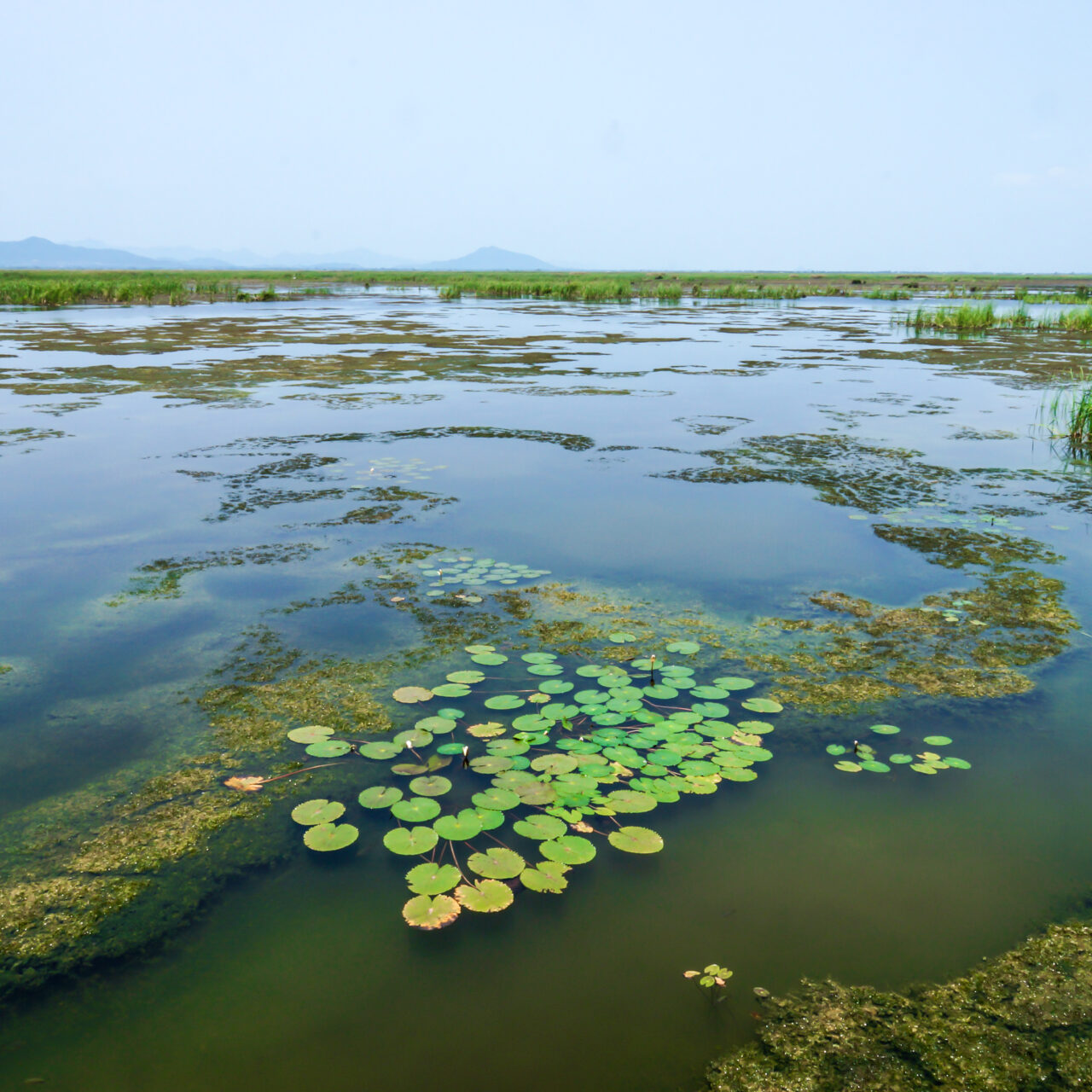
Miyun Reservoir is an important source of drinking water for Beijing and also a key habitat for migratory birds. Data show that migratory birds have lost shoreline habitats due to higher water levels.
In 2023, RCEES (Chinese Academy of Sciences) carried out a demonstration project establishing a constructed wetland in the Chaohe River delta in front of the reservoir. Former grassland areas were converted into wetlands, leading to increased aquatic biodiversity. The next step is to scale up and standardise habitat restoration as a nature-based solution.
Case 2 – Baoxing Catchment (Sichuan)
The Baoxing area is not densely populated but is affected by hydropower, mining, and infrastructure, as well as discharge and runoff from wastewater and agriculture.
The river system is rich in biodiversity and home to several endemic fish species. The area has national importance, partly because it is connected to the Giant Panda National Park. There is a local ambition to use nature-based solutions more widely to strengthen ecosystem health while maintaining important functions such as flood protection.
What will the network deliver?
The project is structured around three tracks that together will lead to concrete action plans for implementing nature-based solutions in the two cases.
1) A shared professional foundation for nature-based solutions in freshwater
The partners will clarify and align definitions, methods, and measurements for nature-based solutions across different freshwater types (wetlands, lakes, reservoirs, and rivers) and link them to key ecosystem services and biodiversity indicators. This will take place through an introductory seminar and a kick-off workshop.
2) From nature to market – and back again
The partners will identify barriers and opportunities for scaling up nature-based solutions in China, including how technological solutions can support nature-based approaches and improve overall performance without losing biodiversity benefits. The work will be carried out through preparatory workshops and a delegation.
3) Action plans for the two cases
The partners will map pressure factors in the two systems (reservoir and catchment/river basin), translate knowledge from tracks 1 and 2 into a shortlist of relevant nature-based measures, and define which actors need to be involved to move forward towards pilot and demonstration projects.
Partners and roles
The network brings together five core organisations with complementary competences:
• Clean – Denmark’s Water and Environment Cluster (project management and mobilisation of Danish actors)
• Aarhus University, Department of Ecoscience (AU ECOS) (scientific foundation and bridge between research and implementation)
• DHI China (technology and market insight as well as modelling and decision support)
• RCEES, Chinese Academy of Sciences (CAS) (local case knowledge and experience with wetland demonstration and habitat restoration)
• SCAES, Chinese Academy of Sciences (CAS), Sichuan (local case knowledge and monitoring in Baoxing)
In addition, ICDK Shanghai supports planning and logistics for the delegation as well as communication, including an outcome report.
Expected results
By the end of the project, the network is expected to have:
- Established a shared professional foundation for nature-based solutions in freshwater
- Conducted site visits and joint prioritisation in the two cases
- Developed action plans and a shortlist of relevant nature-based measures
- Identified next steps and possible funding tracks for at least one joint follow-up application
Are you a company, utility, municipality, or knowledge institution working with nature-based solutions, biodiversity, or freshwater management, and would you like to follow the project or contribute knowledge and technology?
Contact Clean to learn more about opportunities to engage in the network’s activities.
Funding
The project is funded by the Global Innovation Network Programme (GINP) under the Danish Agency for Higher Education and Science.
Duration
01/01/2026 – 31/12/2026
Budget
710.360,00
Supported by

Want to know more?
-
Joan Juul
Senior Project Manager
Tel +45 24 80 96 54
joj@cleancluster.dk
Linkedin -
Sumaya Husain
Project Manager
Tel +45 27 38 35 39
shu@cleancluster.dk
Linkedin
Partners


Other projects
All projects-
Trace
Trace contributes to Denmark reaching the national climate goals within the circular economy by 2050 with a focus on…
-

ICEFIELD
ICEFIELD is a Danish innovation project working on CO₂ removal in agriculture using a nature-based solution called…
-
Ocean Valley
The Øresund region has a unique opportunity. On both sides of the sea, there are strong energy systems, industrial…
-
LogiCCS
This project aims to develop sustainable, energy-efficient maritime logistics for transporting carbon dioxide (CO2)…