Upcycled PA6 and glass fibre aim to cut building CO2 by 90 percent
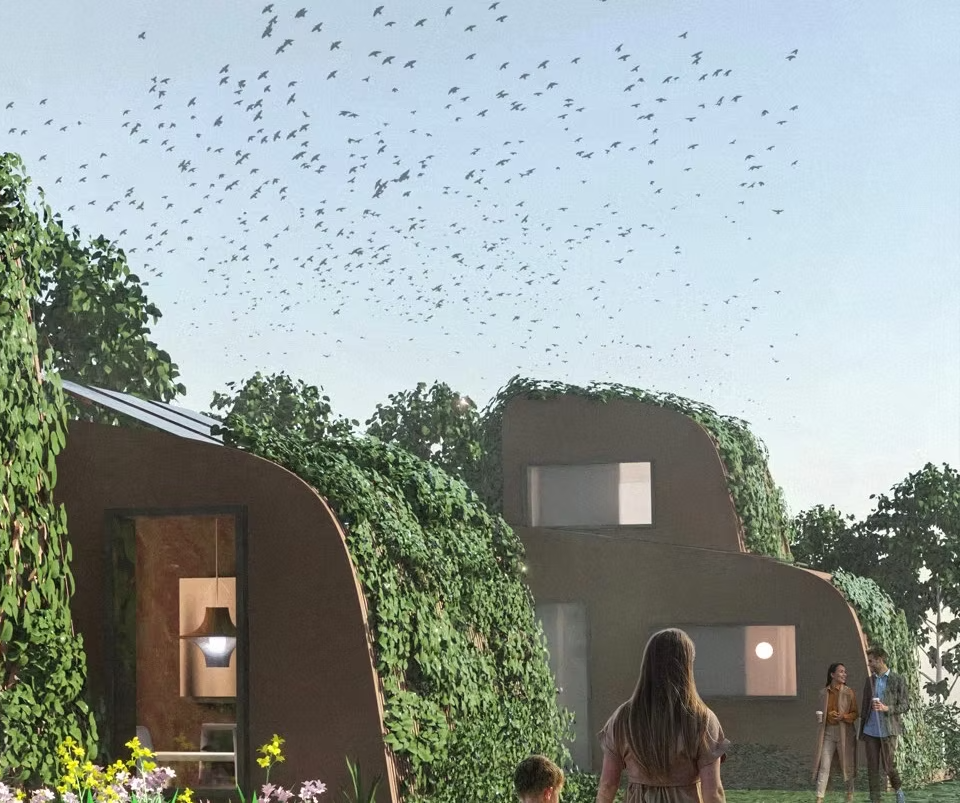
In this project WOHN and DBI are developing a new building system where 3D printed housing modules in upcycled PA6/glass fibre are given a passive layer of fire protection, making them safe to use in circular construction. The ambition is to replace carbon intensive materials like concrete and steel with a solution that can cut the climate footprint by up to 90 percent and form the basis for a full-scale pilot with 36 3D printed student homes in Kalundborg. Along the way, the project brings a high value resource into play that today all too often ends up as waste.
High CO₂ footprint, low recycling
The construction sector has a massive climate footprint, with carbon intensive materials such as concrete and steel still dominating, even though they are difficult to recirculate. At the same time, large volumes of PA6/glass fibre are produced in the EU every year, but only a small share is recycled – the material often ends up as waste despite its high technical value and potential for multiple reuse cycles. The lack of documented fire performance and clear certification pathways means that circular high value materials are only used to a limited extent in real buildings – and their climate and resource potential is lost.
A circular solution: 3D printed construction with certified fire safety
WOHN and DBI are developing a fire safe building system based on 3D printed housing modules in upcycled PA6/glass fibre combined with a passive fire protection layer. Through bio based and intumescent coatings (fire protective paints), optimised material composition and a specific structural geometry, the modules can meet strict fire safety requirements while using a largely untapped resource. The material can be recycled several times and reach a very long lifetime, making the solution a circular alternative to CO₂ intensive materials such as concrete and steel. In this way, the technology points towards a scalable building system where climate, resources and fire safety are integrated from the outset.
From development project to documented building system
The project aims to turn the technology into a documented, market ready building system with up to 90 percent lower CO₂ emissions than conventional construction. First milestones are fire classifications as well as a full-scale project with 36 3D printed student homes in Kalundborg that can serve as a reference for future projects. In the longer term, the ambition is to scale the solution to other building types and enable its use more widely in both Danish and international construction.
Other contributors:
Kalundborg Municipality
Closing Loops
A.V. Pehrsson (upcycled PA)
Recomposite (glass fibre)
Danish Technological Institute (mechanical testing)
Duration
01/10/2025 – 30/04/2026
Budget
200.000
Supported by


Partners

Other projects
All projects-
Trace
Trace contributes to Denmark reaching the national climate goals within the circular economy by 2050 with a focus on…
-

ICEFIELD
ICEFIELD is a Danish innovation project working on CO₂ removal in agriculture using a nature-based solution called…
-
Ocean Valley
The Øresund region has a unique opportunity. On both sides of the sea, there are strong energy systems, industrial…
-
LogiCCS
This project aims to develop sustainable, energy-efficient maritime logistics for transporting carbon dioxide (CO2)…