From guesswork to insight: Digital help in choosing the right wetlands
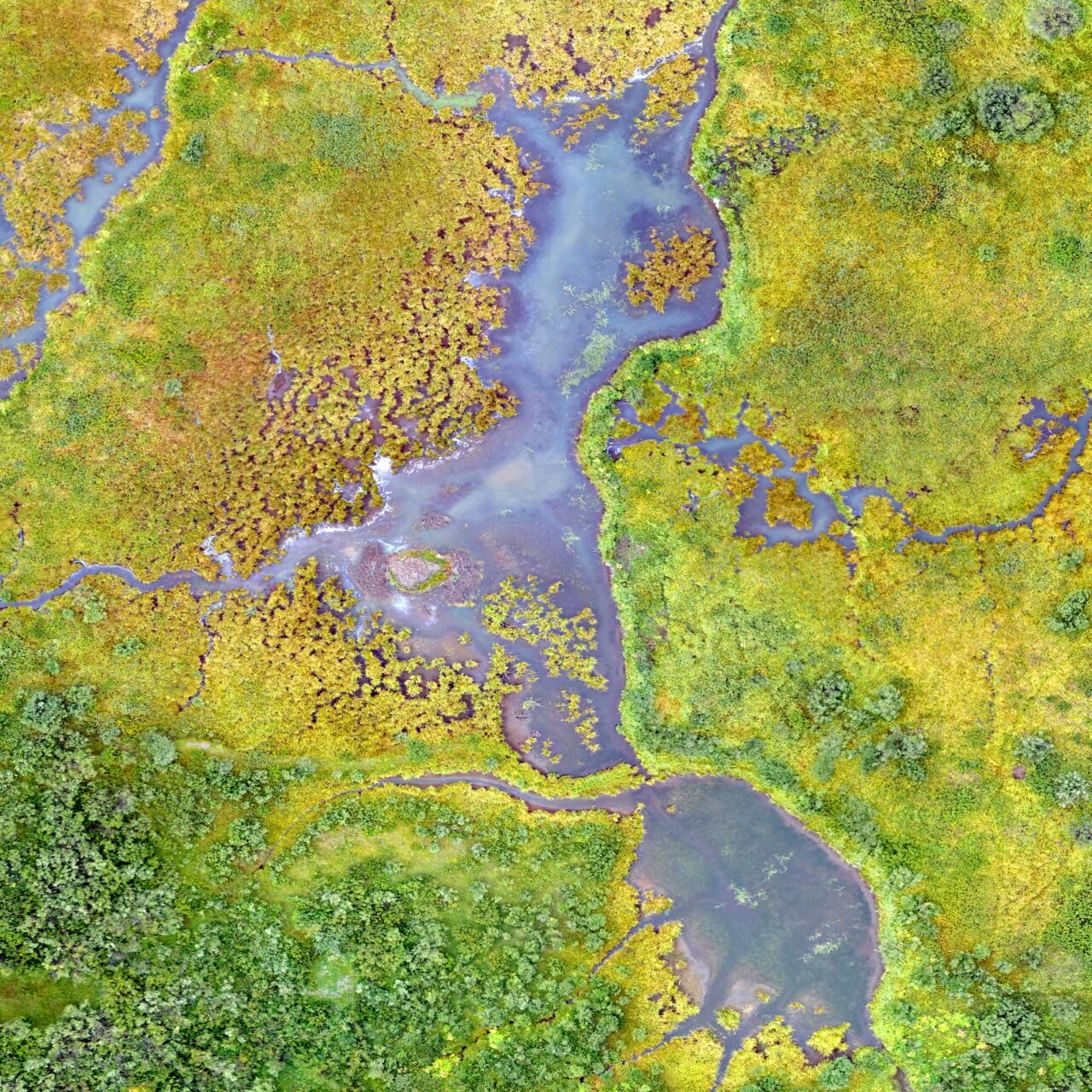
Today, Denmark’s ambition of restoring 100,000 hectares of wetlands often stalls long before any soil is moved, simply because no one can clearly point to the areas with the highest climate and nature impact. With digital ecological site prioritisation, PEATZ and the Danish Technological Institute aim to turn scattered data and heavy consultant reports into a clear map of where restoration will make the biggest difference for climate, biodiversity and water quality.
Slow and uncertain site selection blocks progress
Despite a national target of restoring 100,000 hectares of wetlands by 2030, only a very small share has been realised so far. A main barrier is the identification and prioritisation of sites: today the process relies on static CO₂ and nutrient maps with limited ecological insight, while consultant-driven assessments are expensive, slow and fragmented. This delays the Danish Agency for Green Land Planning and Aquatic Environment (SGAV) subsidy decisions, creates uncertainty for landowners and means that many projects are either never implemented or not placed where they deliver the highest ecological return.
A digital tool for ecological prioritisation
The project develops a proof-of-concept for digital ecological site prioritisation: a decision support tool that combines more than 45 ecological data layers (including soil type, hydrology, protections and landscape context) with rule-based methods and early AI models. In a single workflow, the tool can rank areas based on their potential for climate, biodiversity and water environment benefits, while integrating eligibility rules and subsidy logic from the beginning. This allows today’s manual, consultant-heavy assessments to be replaced by a more consistent, scalable and transparent process.
From one-off projects to scale
The goal is a validated method that demonstrates how digital decision support can speed up restoration and increase the environmental impact per hectare. In the short term, the tool should reduce processing time, give SGAV a stronger basis for prioritisation and build trust among landowners that their land is assessed fairly and professionally. In the longer term, the ambition is for ecological site prioritisation to become a new standard in nature restoration, integrated into PEATZ’s existing support tools and ready to be scaled from Denmark to the rest of Europe, where all member states must implement the Nature Restoration Law.
Duration
01/11/2025 – 01/06/2026
Budget
200.000
Supported by


Partners



Other projects
All projects-
Trace
Trace contributes to Denmark reaching the national climate goals within the circular economy by 2050 with a focus on…
-
ICEFIELD
ICEFIELD is a Danish innovation project working on CO₂ removal in agriculture using a nature-based solution called…
-
Ocean Valley
The Øresund region has a unique opportunity. On both sides of the sea, there are strong energy systems, industrial…
-
LogiCCS
This project aims to develop sustainable, energy-efficient maritime logistics for transporting carbon dioxide (CO2)…