Biochar and Biocover: New weapon against methane from cattle
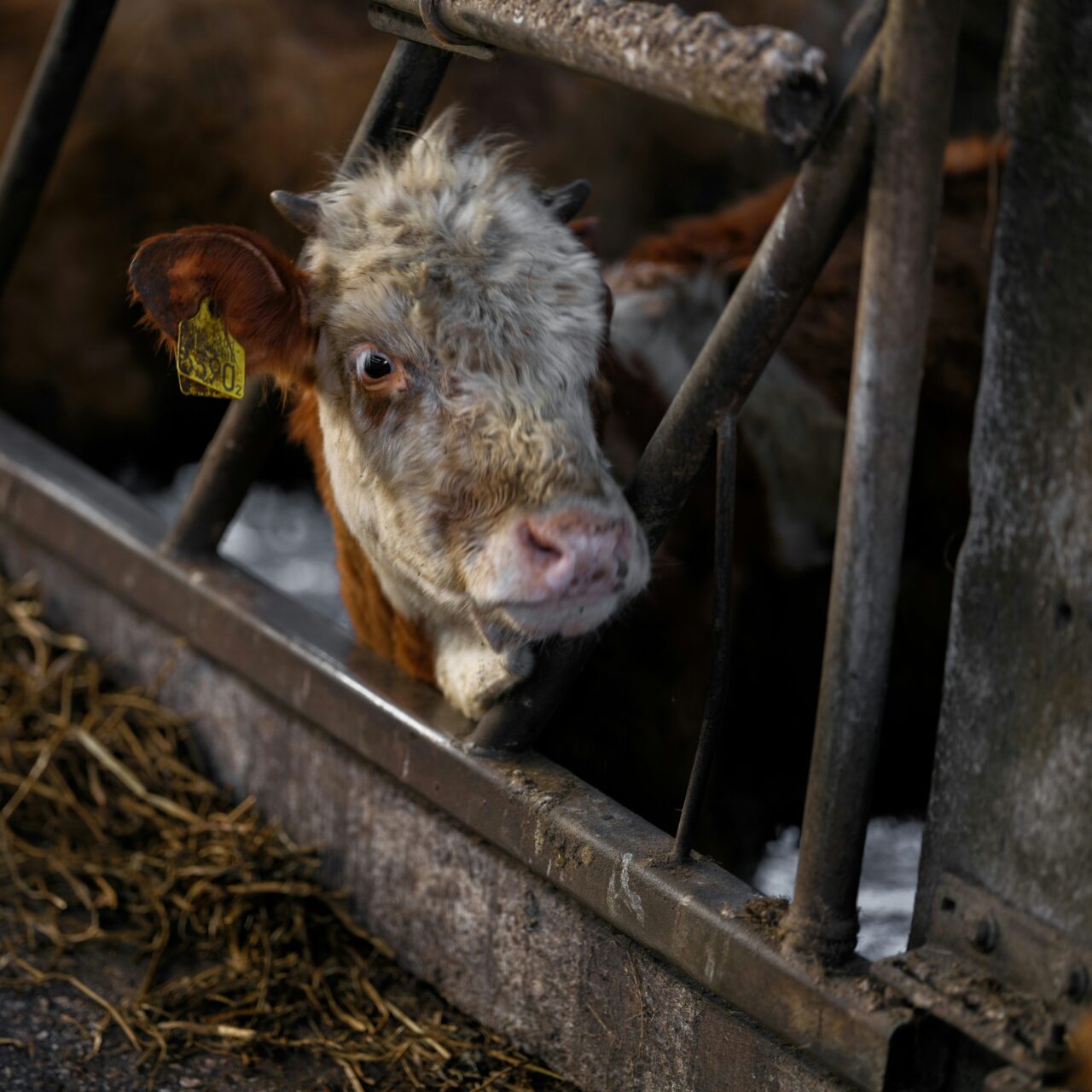
In Danish cattle barns, methane, nitrous oxide and ammonia escape in large, diluted airflows invisible, but with a very visible climate footprint. With a new filter concept that combines biochar, zeolite and Biocover technology, the project partners want to test whether these greenhouse gases can be concentrated and broken down before the air ever leaves the barn.
Major methane emissions in highly diluted barn air
Cattle production is one of the largest sources of anthropogenic methane, and in Denmark alone, emissions from cattle barns account for around 30% of agriculture’s total greenhouse gas emissions. The gases originate both from enteric fermentation in the cows and from manure on barn floors and in storage tanks, and they are mixed into huge volumes of ventilation air where methane is present at very low concentrations. This makes effective air cleaning difficult: traditional filters can deal with compounds like H₂S, but methane passes through, and feed measures can only solve part of the problem. The result is that millions of tonnes of CO₂-equivalent gases leave barn roofs every year without any form of treatment.
A three-step attack on methane from cattle barns
The project tests a proof-of-concept for a new type of air cleaning that tackles the challenge in three steps: concentration, desorption and microbial degradation. First, biochar and zeolite are tested as filter media for adsorption of methane and other greenhouse gases in barn air; next, the project examines how the captured gases can be released in a controlled way (desorption) and directed into a compost-based Biocover filter, where specialised microorganisms convert methane into CO₂. By “collecting” the gases in the filter material, the concentration – and thereby the probability of effective biological reduction – is significantly increased, even at the low methane levels typically found in barns.
Towards a compact climate filter for cattle barns
The goal is to develop a compact filter system capable of delivering at least a 50% reduction in methane from barn air while also reducing other problematic gases such as N₂O and H₂S. In the short term, the project aims to generate robust lab and pilot data that can form the basis for further development towards a commercial solution around 2028, with a price and operating cost that make it realistic for farmers to invest. In the longer term, the vision is that biochar- and Biocover-based greenhouse gas filters become a natural part of efforts to cut agriculture’s climate footprint – and that the technology can be scaled to markets across the EU and globally as climate taxes and regulation drive demand for documented, effective solutions.
Duration
15/10/2025 – 31/05/2026
Budget
200.000
Supported by


Partners



Other projects
All projects-

Trace
Trace contributes to Denmark reaching the national climate goals within the circular economy by 2050 with a focus on…
-

ICEFIELD
ICEFIELD is a Danish innovation project working on CO₂ removal in agriculture using a nature-based solution called…
-

Ocean Valley
The Øresund region has a unique opportunity. On both sides of the sea, there are strong energy systems, industrial…
-
LogiCCS
This project aims to develop sustainable, energy-efficient maritime logistics for transporting carbon dioxide (CO2)…