2. Jan 2026
From idea to testing: Vibration sensor helps RUNI predict wear on expensive machine parts
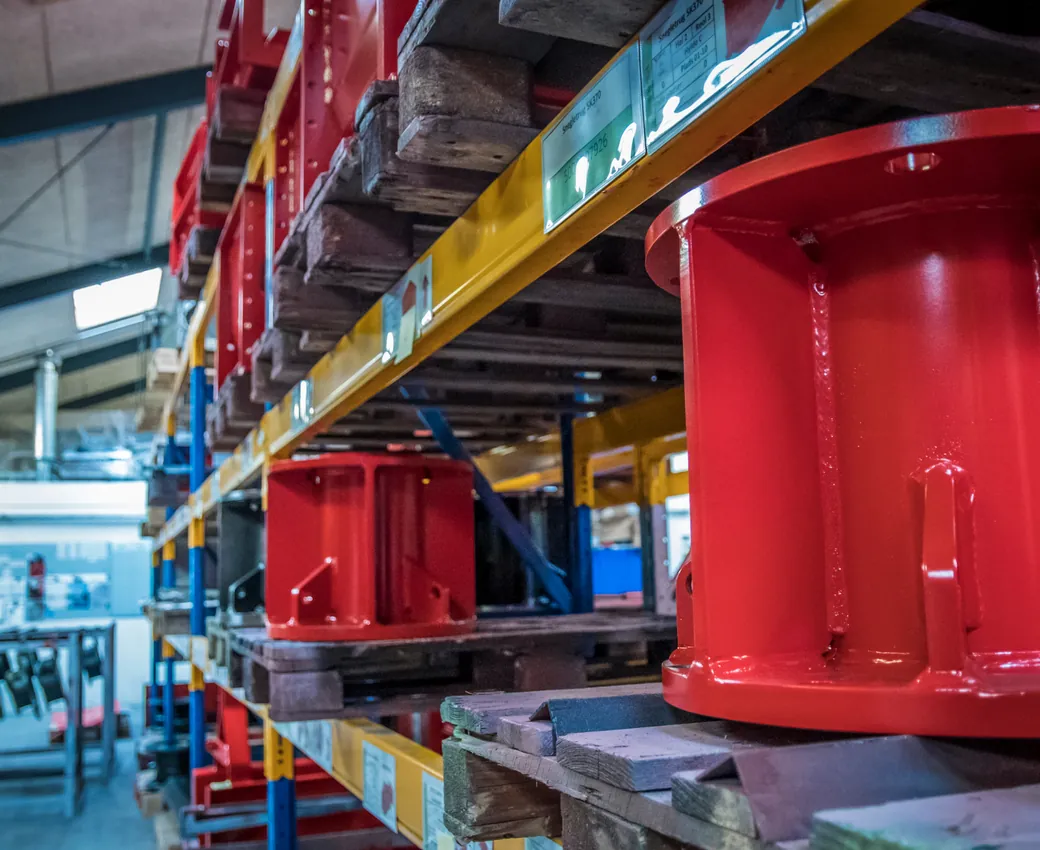
Is it possible to attach a vibration sensor to a machine and detect changes in sound levels, thereby enabling preventive maintenance of the machine?
This is a challenge that many companies face, but they are unsure how to get started.
This was also the case for clean member RUNI, headquartered in Tarm, which specializes in producing industrial machines for compacting waste. This ranges from fish crates to plastic soda bottles to paint buckets.
The recurring challenge here was that a support bearing located in the center of the machine, where all the plastic passes through to be compacted, was subject to wear and tear. At the same time, the bearing is located in a place that is difficult to inspect without dismantling the machine. The company therefore found that customers often only discovered the problem when the machine broke down, which can result in repairs that are many times more expensive than the relatively low cost of timely replacement of components.
RUNI therefore teamed up with the Alexandra Institute to test whether it was possible to measure the vibrations from the bearing and use this as an indicator of wear. By comparing two identical machines, one new and one worn, they found differences in the vibration patterns and could see that the worn machine had a higher noise level.
The collaboration has given the company an understanding of how to work with preventive maintenance. It’s about replacing the bearing before it fails, so you can both improve the customer experience and reduce waste, explains Lasse Jepsen, who is responsible for development at RUNI.
The next step is to conduct a long-term test, measuring a machine in the real world and slowly tracking wear and tear.
We received support for the project as a preliminary project, where we learned about vibration measurement and received help with data analysis. These were not skills we had in-house, so we would never have gotten started if we hadn’t had the Alexandra Institute to help us. It has clearly been the cheapest way for us to test something new, and it has been done in a professional manner and not just by guesswork. – Lasse Jepsen, Research & Development, RUNI.
In addition to economic benefits, the project also has an important sustainability perspective.
It is clear that if you have to replace both the bearing and the screw that compresses the plastic every three years, it is far less sustainable than if you only have to replace the bearing. The insights and data collected from the sensors during the test period can help extend the service life of a machine and thus reduce its carbon footprint. – Lasse Jepsen, Research & Development, RUNI.
It doesn’t take a lot of setup to pressure test an idea.
This is a situation that many industrial companies find themselves in, where they have a good idea of how they can work in a more data-driven way and thus stay ahead of maintenance. But they are typically unsure about how to get started. This is something we can help with, and we do so by visiting the company and thoroughly familiarizing ourselves with the problem. Based on this, we build a sensor solution that can collect data and draw up clear guidelines for the experiment. – Jakob Fredslund, Senior Solution Architect at the Alexandra Institute.
The test run between RUNI and the Alexandra Institute took place through TechCircle, the European Digital Innovation Hub (EDIH) in Central Jutland (based at Erhvervshus Midt), where companies can explore new technological opportunities.
EDIH is supported by the Digital Europe program under the European Union and by the Danish Business Promotion Board.


Want to know more?
-
Jonas Aalborg Petry
Head of Data & BI
Tel +45 20 59 77 52
jap@cleancluster.dk
Linkedin -
Anders Rolighed Larsen
AI & BI Consultant
Tel +45 30323356
arl@cleancluster.dk
Linkedin
Latest news
All news
2. Mar 2026